
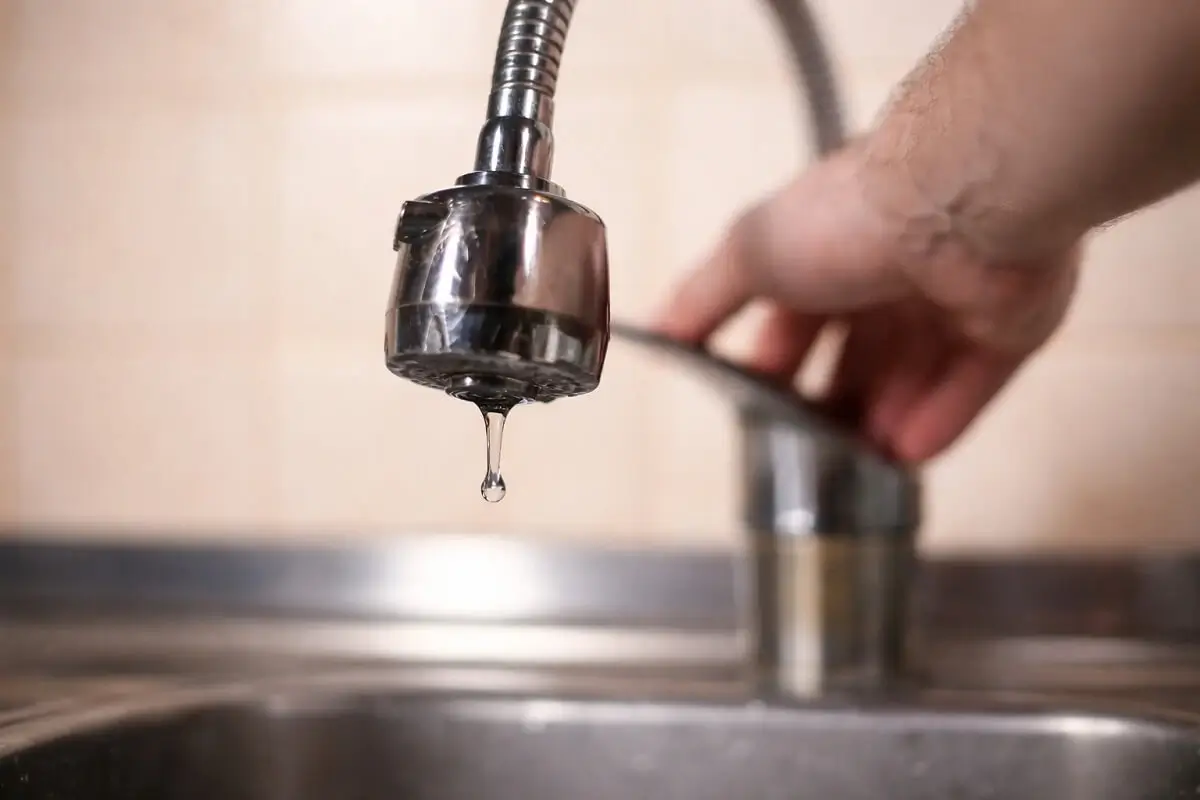

Imagine turning on the tap late at night and discovering nothing is coming out. No slow drip. No warning. Just a weird silence. If you are dealing with no water in your house suddenly on a cold winter night in Ephrata, don’t worry; you are not alone. This is a common winter plumbing issue in the Ephrata area. While it’s indeed an issue, there might not be any major plumbing failure associated with the event.
Winters in Lancaster County, including Ephrata, are often defined by overnight freezes, which could disrupt water flow suddenly without giving any visible warnings beforehand. The key here is to remember that pipes do not always burst immediately, but pressure buildup from freezing can lead to sudden failures. Sometimes, the issue goes deeper—lying often behind the walls or under the floors. Hence, understanding what’s happening will help you take the right step and avoid a temporary, fixable problem turning into permanent damage.
Why This Is One of the Most Common Emergency Plumbing Calls in Ephrata
During winter months, our plumbing team regularly handles frozen pipe calls from older homes across Ephrata, especially properties built before the 1980s with exposed basement or crawlspace piping. Overnight temperature drops below 25°F can freeze vulnerable water lines within hours, particularly in exterior walls and uninsulated utility areas. In many cases, homeowners report complete water loss between 9 PM and 6 AM—when temperatures are at their lowest.
Why Does This Happen More Often on Cold Winter Nights in Ephrata?
Ephrata households often encounter common winter plumbing problems—taps with no running water are one of them. Several factors make homes more vulnerable than many homeowners realize. Here’s how.
- Due to overnight freezing, temperatures can fall below the expected range, even though the daytime temperatures are likely to be manageable. This rapid change often puts a lot of pressure on the water pipes.
- Most Ephrata homes are decades old, which means pipes are often situated in the basement, crawl spaces, or exterior walls, having no proper insulation.
- Homes outside the dense city areas often have longer pipes running through them. It automatically increases the chances of one section freezing overnight.
- Some local water lines aren’t buried deep enough, which prevents them from escaping the freezing ground conditions during the prolonged cold periods.
The Most Common Reasons You Have No Water at All
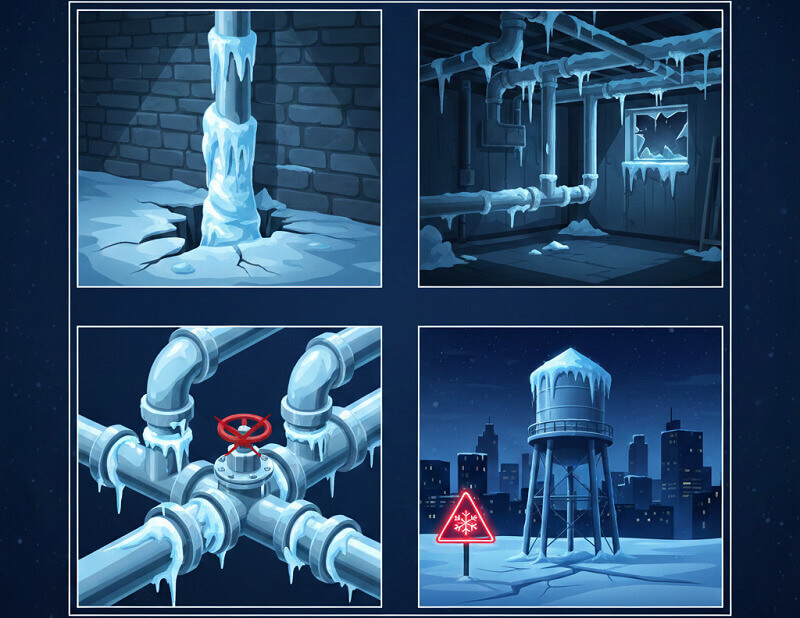
When there’s no water coming out of any taps in the entire house, the most likely cause is usually a full blockage. This can’t be considered a minor issue; if left unaddressed, the damage can worsen and become more costly to repair. Considering how unforgiving Ephrata winters can be, homeowners should be fully aware of the probable scenarios.
- If the main pipe bringing water from the street to your house freezes underground or near the foundation, water can stop completely without prior warning.
- Once the overnight temperature drops suddenly, water pipes running through basements, crawl spaces, or exterior walls can suffer from blockages, especially in older homes.
- Water usually freezes at the bends, joints, and shutoff valves first. It is in these areas where the water flow slows down, and ice can form even if the nearby pipes seem to be fully operational.
- In rare cases, local water systems are likely to experience cold-related disruptions, causing no water in the house suddenly.
As temperatures continue to remain below freezing, homeowners in Ephrata often depend heavily on emergency frozen pipe repair services. To top it off, scheduling a winter plumbing inspection can also help locate the freezing points and prevent future problems.
What Is the Difference Between No Water vs Low Water Pressure?
Homeowners often wonder if low water pressure in the house suddenly can be considered equivalent to no water coming from the faucets and taps. While both situations may appear similar, they signal different underlying problems.
No water coming from the taps usually means that the connecting pipes are fully blocked due to ice. As water can’t move past the frozen section, faucets remain dry. Such situations are usually caused by freezing temperature drops overnight.
On the contrary, low water pressure might indicate a partial freeze. Here, water continues to squeeze through a narrow opening within the pipes, usually with a slow speed. Here, faucets usually run inconsistently but don’t remain completely dry.
Understanding this fundamental difference is necessary for homeowners. Low water pressure within the pipes can be an early warning sign, while no water coming out of any taps indicates the freeze has already fully set in.
Warning Signs Your Pipes Are Frozen
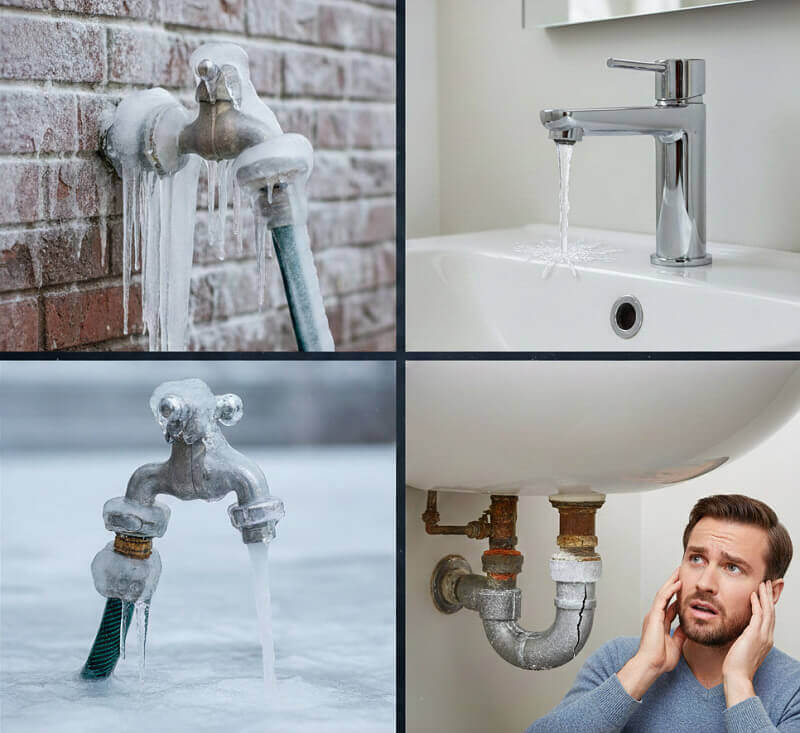
Frozen pipes don’t end up failing immediately. Homeowners can easily look out for common plumbing problems in cold weather to prevent being caught off guard. That being said, below we have mentioned a few red flags to be aware of.
- Visible frost on the water pipes in the basement, crawl spaces, or garages signals that temperatures are low enough to have initiated the freezing cycle inside.
- A weak-performing faucet with sudden shutdown often indicates ice is forming and slowly blocking the connected water pipe.
- Clanking, whistling, or hollow sounds usually occur when the water is trying to move past an ice blockage within the pipe.
- When more than one faucet stops working, it usually means that the frozen section is affecting a shared water supply line rather than a single fixture.
What You Should and Should Not Do Immediately?
Do’s
- Allowing a small drip will relieve the pressure inside the pipe while reducing the chance of a sudden burst.
- Increasing heat, especially near the exterior walls, can slowly warm the freezing sections without stressing the plumbing setup.
- If you are unsure of what to do if a pipe breaks, seek help from a 24-hour emergency plumbing service.
Don’ts
- Torches or open heat can damage the pipe materials and increase the risk of fire. That’s why professional frozen pipe thawing services always use controlled, safe methods.
- Frozen valves, if forced, can snap and cause leaks immediately.
- Waiting will only allow the pressure to build, increasing the risks of damage as temperatures continue to fluctuate.
Why This Is Not a DIY Situation for Most Homes?
When water suddenly stops flowing from the taps or faucets, you might be tempted to try the quick DIY fixes. However, the frozen pipes are rarely simple, especially in Ephrata homes. Here’s why.
- Pipes usually freeze where you can’t see them—under floors, behind the drywall, or near foundations—making the real problem easy to overlook.
- Applying uneven warming or heat at the wrong section can cause the pressure to build, leading to small cracks or sudden leaks.
- Licensed plumbers always use proper diagnostic equipment to identify the frozen sections and remove the ice.
If the freeze isn’t obvious, calling licensed plumbing professionals in Ephrata for emergency plumbing repair is the most feasible and practical decision.
A Recent Frozen Pipe Call We Handled in Ephrata
In a recent winter service call near central Ephrata, a homeowner in a 1960s-built property experienced complete water loss due to a frozen main supply line running along an exterior basement wall. The pipe had not burst yet, but internal ice expansion was creating significant pressure buildup. Controlled thawing and insulation reinforcement prevented structural damage and restored water flow within a few hours. Situations like this show how quickly frozen pipes can escalate if not handled professionally.
When Should You Call a Licensed Plumber in Ephrata?
You should contact a licensed plumbing professional immediately if:
- More than one faucet has stopped working
- You see visible frost forming on exposed pipes
- Your water meter is running but no water is flowing
- You hear unusual banging or hollow sounds inside walls
- Temperatures are expected to remain below freezing overnight
Delaying action during freezing conditions can increase internal pipe pressure and lead to sudden pipe bursts.
Serving Ephrata and Surrounding Lancaster County Areas
Our plumbing services extend throughout Ephrata and nearby communities, including Akron, Denver, Lititz, and surrounding Lancaster County neighborhoods where winter freeze conditions frequently impact residential plumbing systems.
Homeowner Takeaway
Sudden water loss during the winter months isn’t just an inconvenience—it’s a warning sign that something isn’t right. In cold Ephrata nights, plumbing problems often escalate silently and quickly if ignored. Staying calm, recognizing the early signals, and knowing when to bring in a professional can prevent property damage and restore water flow safely.