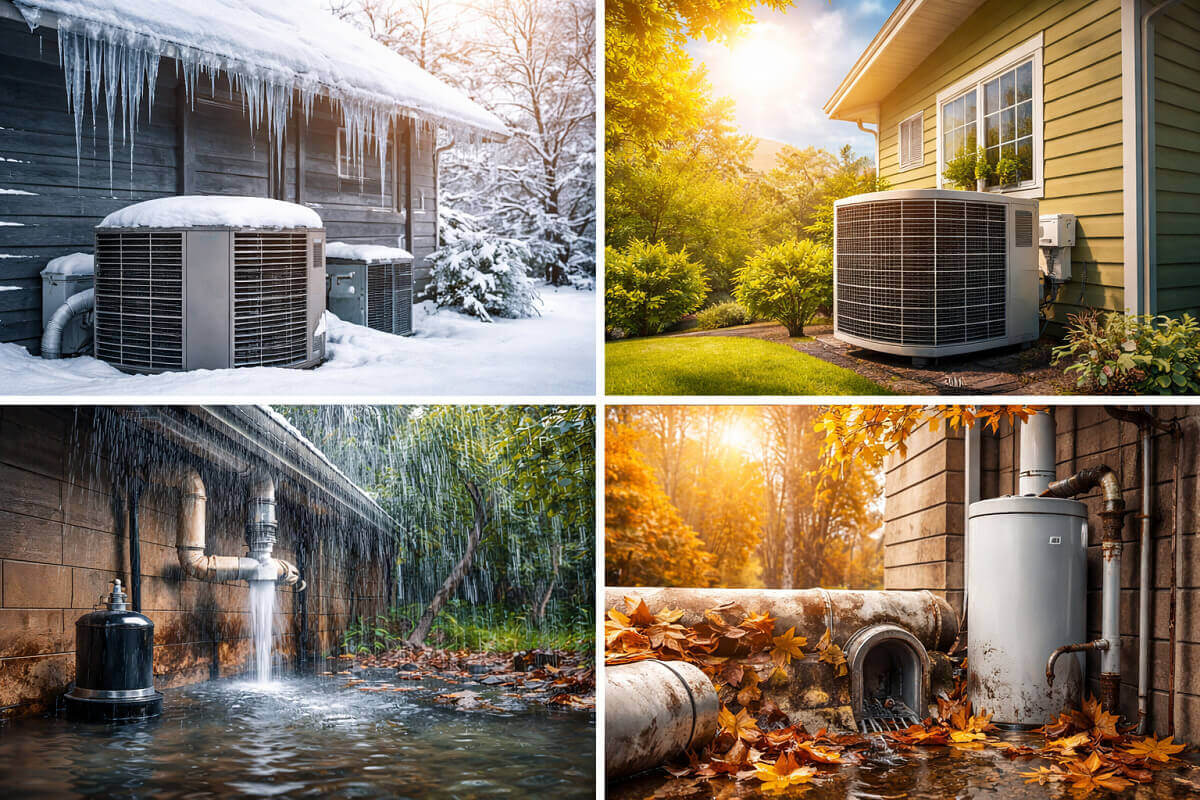

Homes across Berks and Montgomery County experience significant seasonal weather shifts from sub-freezing winter nights to high-humidity summer heatwaves. These temperature swings place continuous stress on residential HVAC systems and plumbing infrastructure, especially in older properties with aging furnaces, ductwork, and underground supply lines. In many cases, we see seasonal wear accumulate gradually, only becoming noticeable when heating efficiency drops or small plumbing leaks begin to surface.
Understanding Pennsylvania’s Seasonal Weather Extremes
Sharp contrasts primarily define Pennsylvania’s climate throughout the year, and there’s no doubt that homeowners can feel the changes in the weather firsthand. Below are some common seasonal conditions homeowners experience.
- Winters mean extended freezing temperatures, coupled with thick layers of ice and snow deposits. This places sustained demand on the heating systems while leaving the plumbing setup vulnerable to freezing conditions.
- Conversely, summers shift to the opposite extreme, with high humidity and heat compelling air conditioners to operate beyond their threshold ratings.
- Fall and spring add another layer of drama as temperature levels fluctuate unexpectedly within a single day. Take warm afternoons as an example. These are often followed by freezing nights.
Additionally, seasonal storms and increased rainfall expose foundations, outdoor system components, and basements to excess moisture buildup. Even though each season presents a different set of challenges, the common thread tying all of them together is constant but unprepared adjustments, which further put a lot of strain on both HVAC and plumbing systems.
Seasonal System Wear We Commonly See in Local Homes
In Berks and Montgomery County homes, extended winter heating cycles often cause older gas furnaces to operate continuously for hours, accelerating internal component fatigue. During summer heatwaves, high-efficiency air conditioning systems frequently experience drainage stress due to excess humidity buildup. We also observe minor pipe joint loosening after repeated freeze-thaw cycles, especially in properties with older plumbing materials installed before modern insulation standards.
How Does Extreme Cold Affect HVAC and Plumbing Systems?
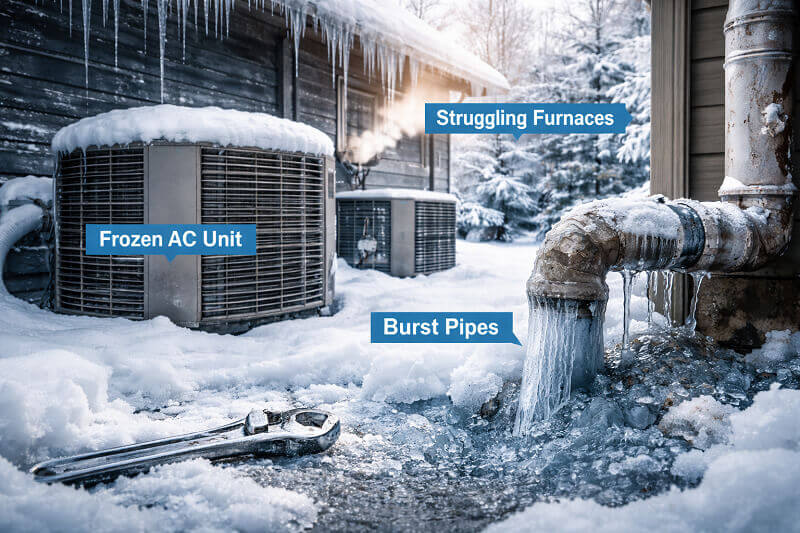
It’s not just the winter plumbing issues Pennsylvania homeowners need to tackle. Rather, the impact of cold temperatures is evident on the HVAC system too, which further adds to the overall maintenance and repair challenge. Extended freezing conditions force the heating equipment units to operate continuously without stopping, while the water pipes and fixtures are exposed to conditions they were never meant for. What’s worrisome is that the damage isn’t visible on day one. Rather, these issues often surface weeks or months later. Here’s what homeowners often struggle with during the winter months.
- Expanding frozen water pipes place excessive pressure on fittings and joints
- Older furnaces running longer cycles, which further accelerate normal wear and tear
- Heat pumps struggling to deliver the same efficiency during extreme cold spells
- Freezing conditions cause small, hidden cracks in the pipes, which leak once temperatures rise
Homeowners fail to realize the existence of these issues until they face a visible problem. That’s why scheduling a professional heating system inspection or plumbing maintenance service before or after the winter can help pinpoint early signs of unexpected component fatigue and wear.
Summer Heat and Humidity Stress on Home Systems
It’s not the mercury rise that happens during Pennsylvania’s summers. Instead, homeowners also experience prolonged periods of heatwaves, coupled with extremely high humidity. Hence, air conditioners often run for long, uninterrupted cycles just to ensure the indoor temperature is comfortable and pleasant to live in. Simultaneously, excess moisture in the air puts unnecessary strain on both drainage systems and cooling equipment units. These create issues like
- Compressors and condensers are forced to work under constant load, thereby accelerating wear rate.
- Air conditioning systems operate nonstop during peak heat cycles, which often causes damage to the delicate mechanical components inside.
- Condensation usually leads to small crack and hole formation on cooling lines and nearby plumbing components.
- Elevated indoor humidity ends up putting too much pressure on sump and drain systems.
As the summer HVAC strain or plumbing fatigue deepens with time, a sharp decline in performance gets mistaken as a symptom of normal aging. However, scheduling routine AC maintenance services can help homeowners address the efficiency loss before it escalates into a complete breakdown. To top it off, a home HVAC performance check can also provide a clear picture of how well the system is handling the seasonal stress or if it is on the verge of a shutdown.
The Hidden Impact of Seasonal Transitions (Spring and Fall)
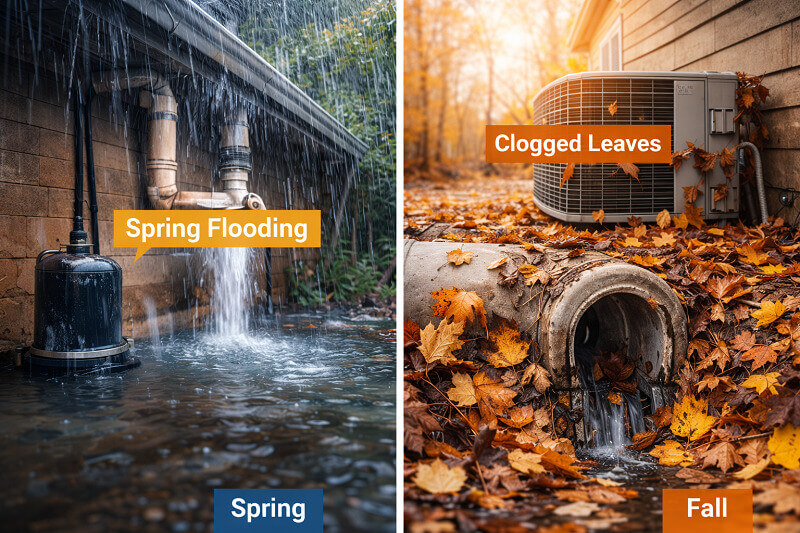
You will be surprised to learn that the seasonal weather impact on HVAC and plumbing systems is extreme during spring and fall. These traditional seasons bring rapid temperature changes, frequent downpours, and shifting system demands that silently expose the components to damage over the years. Some of the common transition-period issues include:
- Wide temperature swings cause the water and cooling pipes to contract and expand repeatedly, thereby loosening the joints and fittings over time.
- Heavy spring rain introduces debris of varying sizes into the drainage and plumbing systems.
- HVAC systems switch between hot and cold modes, which increases wear on controls and internal mechanical components.
- Small leaks and efficiency losses get overlooked as minor issues, presumably caused by aging.
Owing to these reasons, spring and fall are ideal times to arrange preventive maintenance routines.
When Seasonal Wear Turns Into a Service Issue
Seasonal stress becomes a service concern when heating systems struggle to maintain consistent indoor temperatures, air conditioning cycles increase in frequency, or small plumbing leaks begin appearing around fittings and joints. Early inspection during seasonal transitions can identify worn components before they result in system failure or emergency repairs.
Warning Signs Homeowners Often Ignore
Seasonal wear in Pennsylvania weather and home systems never announce themselves early. So, homeowners must keep a lookout for the red flags, like
- Uneven heating and cooling between rooms
- Rising utility bills without any drastic change in the usage patterns
- Unusual noises like buzzing, rattling, or frequent cycling
- Slow drains or recurring clogs that get resolved temporarily only
- Reduced water pressure in showers or faucets
Why Preventive Maintenance Matters More Than Emergency Repairs
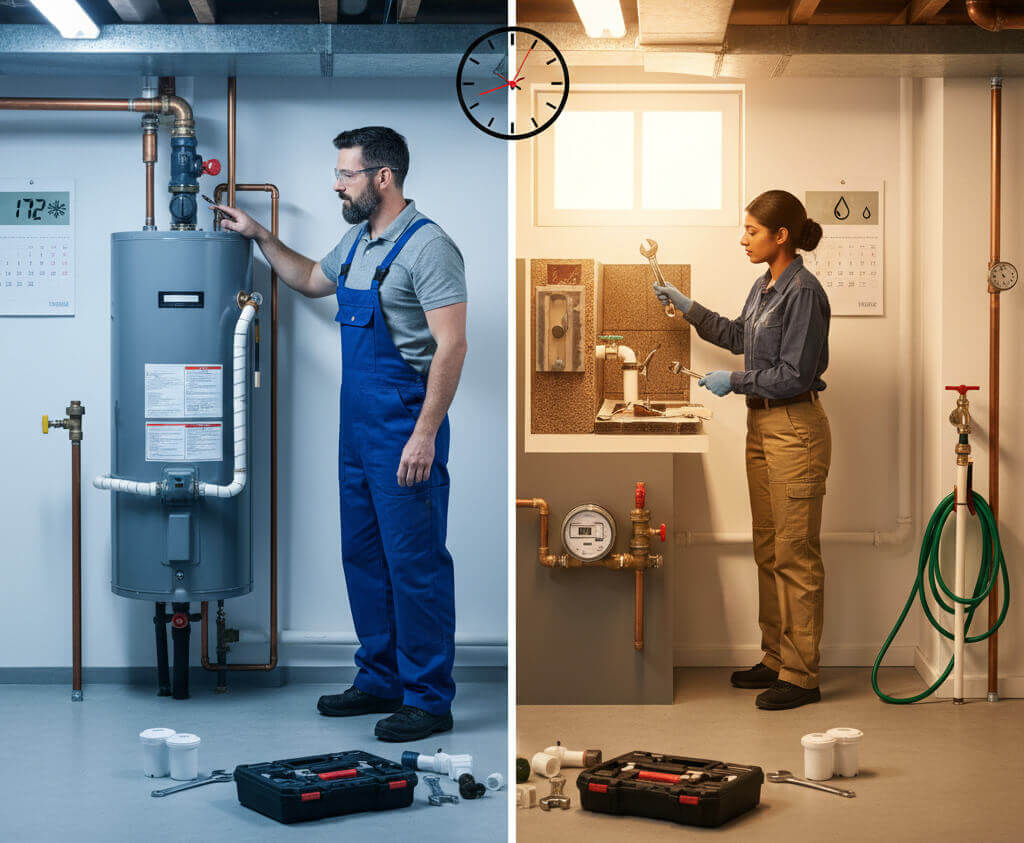
Most homeowners consider HVAC and plumbing maintenance for seasonal changes only after the damage has already been done. However, with routine preventive measures, both systems can be saved considerably. Here’s how.
- Preventive maintenance slashes the risks of sudden system breakdowns
- The lifespan of both plumbing and HVAC systems gets extended
- It can help lower long-term repair and replacement expense overheads
- The overall energy efficiency and performance delivery will be amplified
With options like routine plumbing inspection services and preventive HVAC maintenance plans, homeowners can rest assured that seasonal wear will be addressed proactively.
Serving Homes Across Berks and Montgomery County
Our HVAC and plumbing services support residential properties across Berks and Montgomery County, where seasonal weather extremes frequently impact heating, cooling, and water supply systems. Routine maintenance during transitional seasons helps reduce unexpected breakdowns during peak temperature shifts.
Smart Homeowner Takeaway
Pennsylvania’s seasonal weather impact on HVAC and plumbing systems does not cause damage overnight. Rather, the effects are cumulative, degrading the internal components from within and surfacing only when the issues are far beyond simple fixes. Homeowners who understand the seasonal wear patterns and are aware of the red flags can take precautionary measures to protect their systems, minimize repair costs, and maintain year-round comfort. Scheduling routine system checkups can help prevent surprises through every weather shift.