

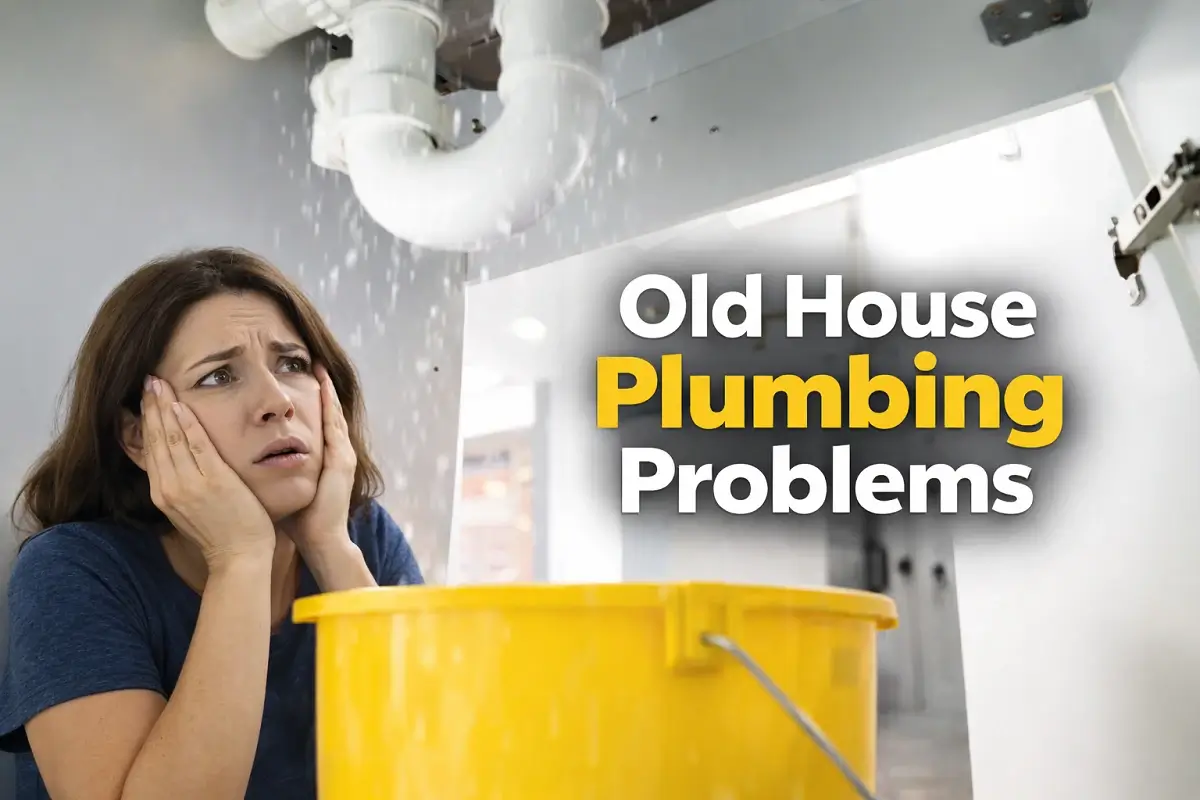

Older homes in Pottstown and nearby Berks County neighborhoods often come with aging plumbing systems that were never designed to handle modern water demand. During sudden pressure changes, freeze-thaw cycles, or peak household usage, these older pipes can fail without warning, leading to burst lines, basement flooding, and costly structural damage.
When plumbing emergencies happen in older properties, they rarely begin overnight. Most failures are the final stage of years of hidden corrosion and internal deterioration.
Key Reasons Plumbing Problems Are Common in Older Homes
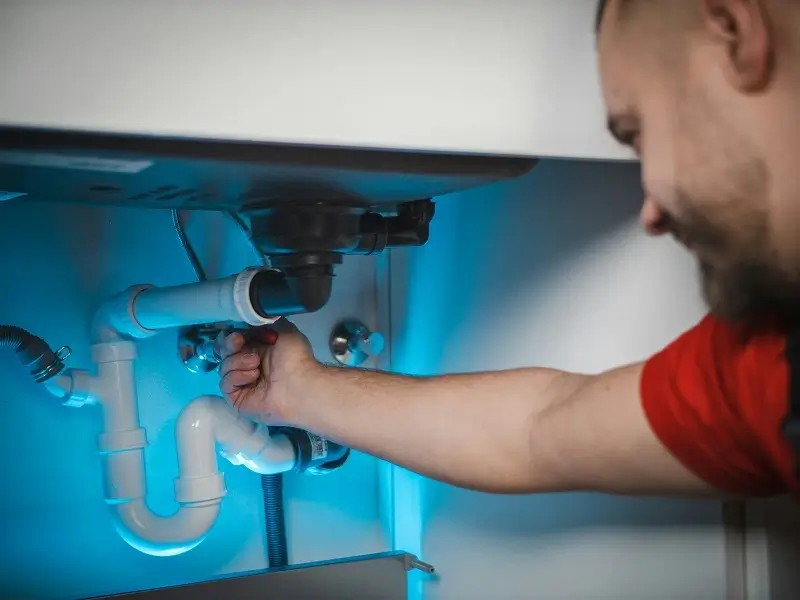
Decade-Old Systems Have Different Materials
Older homes in Pottstown and Montgomery County usually have plumbing components made from galvanized steel, cast iron, or early-generation copper piping. While these were considered durable back in those days, they have suffered considerable degradation over the years. Thus, they are now far less resilient than modern PEX or updated copper systems.
Joints Weakening Over Time
Pipe joints go through constant expansion and contraction cycles as temperatures shift. Over decades, seals deteriorate, and fittings loosen, increasing leak risks at connection points.
Aging Pipes Corrode Internally
Corrosion develops inside the pipe walls, which further narrows flow capacity and weakens the plumbing system’s strength. The damage remains invisible until leaks, pressure drops, or sudden ruptures occur.
Systems Not Designed for Modern Water Demand
Today’s households use significantly more water through appliances and multiple bathrooms. Older plumbing systems suffer from strain under such immense loads, accelerating wear rate and causing emergency failures.
Common Plumbing Problems in Old Houses
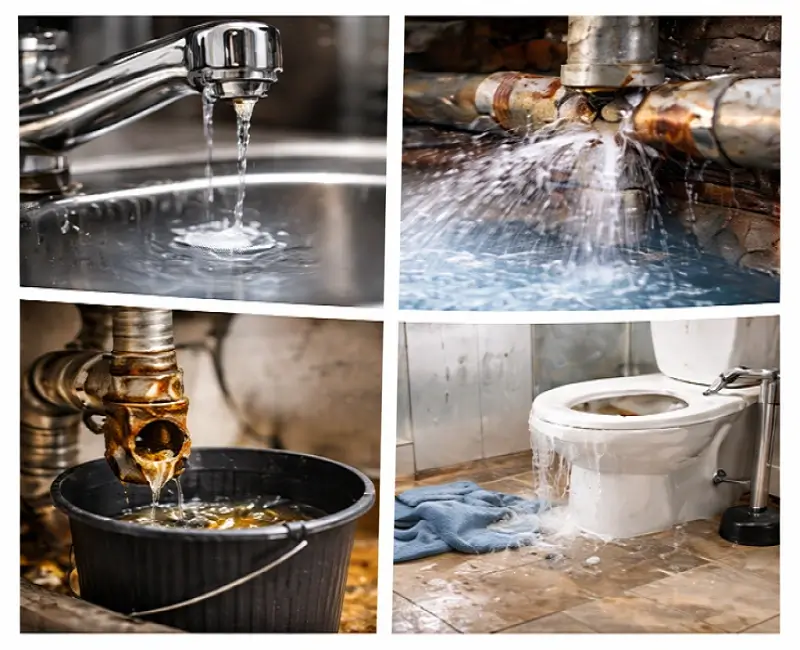
When it comes to common plumbing problems in old houses in Berks and Montgomery County, it’s their silent progression that poses the main danger. Minor internal damage builds over time until pressure, internal corrosion, or shifting infrastructure triggers a failure out of the blue. Recognizing these patterns early will make the real difference between a full-scale emergency and a preventable repair.
Some of the common issues with Pennsylvania’s older residential properties are:
- Galvanized steel or cast iron pipes corrode from the inside out. Rust and constant oxidation reduce the wall’s thickness, restrict water flow, and eventually create vulnerable spots that crack or burst open under pressure fluctuations.
- Small hairline fractures or deteriorating seals allow water to seep slowly into the drywall, insulation layers, or framing. These leaks remain hidden for weeks, if not months, leading to mold growth, wood rot, and structural weakening.
- Aging sewer pipes made of clay or cast iron become brittle with time and lose their structural strength. Freeze-thaw cycles, soil movements, and tree root intrusion often lead to microscopic cracks or blockages.
- Decades of temperature shifts cause expansion and contraction at connecting points. Once fittings loosen and seals degrade, minor drips quickly escalate into larger leaks requiring a repair.
- Hard water deposits accumulate along the pipe’s interior walls, narrowing the passageway for water. As internal pressure increases, the wear rate accelerates.
As these problems develop without alerting anyone, professional leak detection services are critical to pinpoint the hidden vulnerabilities within the plumbing systems of older residences.
Immediate Steps To Take if a Pipe Bursts in Your Older Home
If a pipe suddenly bursts in your Pottstown or Montgomery County home, immediate action can reduce water damage before professional help arrives.
- First, shut off the main water supply valve to stop further flooding.
- Next, turn off electrical breakers in affected areas if water is near outlets or appliances.
- Remove standing water using towels or a wet vacuum to limit moisture absorption.
- Open faucets to drain remaining water pressure from the system.
Even if the leak appears controlled, internal pipe damage may still exist and requires professional inspection.
The Hidden Risks of Galvanized Pipes
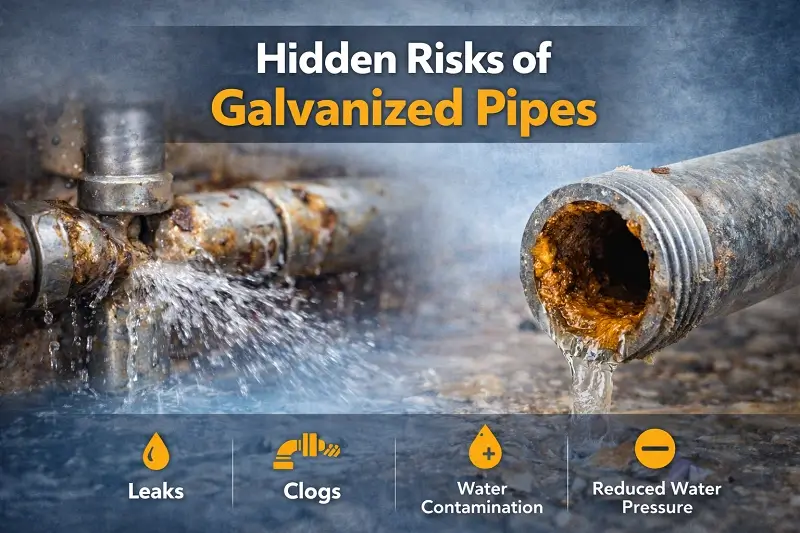
Many villas and residential properties in Pottstown and Berks County that were built during the mid-20th century still function with original galvanized plumbing systems. While once marketed as long-lasting, these are now the primary cause of a non-operational water supply system. Some of the major galvanized pipe problems you can encounter in older properties are:
- Internal rust buildup: Erosion of the protective zinc coating over the years exposes the steel underneath to air. This triggers oxidation, causing rust to form along the interior walls and weaken the pipes’ structural integrity.
- Restricted water flow: The pipes’ internal diameter narrows significantly due to thickened corrosion and scaling. This reduces the water pressure, causing uneven flow between fixtures and putting a lot more strain on the entire system.
- Flaking metal contaminating water: Corroded metal can break loose and travel through the supply lines, causing brown or reddish water and potential quality concerns.
- Sudden pipe bursts: As corrosion thins the pipe walls, normal household pressure often triggers unexpected ruptures.
For these reasons, water line repair specialists advise early evaluation of aging plumbing systems before failure becomes unavoidable. With their guidance, not only will you understand the extent of damage in your house’s aging plumbing lines, but you can also act proactively to repair the minor issues and prevent a full-scale replacement.
How Do Galvanized Pipes Corrode From the Inside?
Galvanized pipes have a zinc coating to protect the core steel material from rust. However, once this protective layer deteriorates, oxidation accelerates internally, compromising the pipe’s physical strength long before the damage surfaces.
Why Plumbing Emergencies Feel Sudden in Older Pottstown Homes
Many homeowners believe plumbing failures happen overnight. In reality, most burst pipes and slab leaks in older Berks County homes are the final result of long-term internal corrosion.
Pipe walls gradually thin from the inside. Small leaks may develop behind walls or beneath flooring without visible warning signs. When municipal pressure shifts or water demand spikes during colder months, weakened pipes can no longer withstand the force, leading to abrupt rupture.
Freeze-thaw cycles common in this region further stress aging galvanized and cast iron lines, accelerating failure risks.
Pennsylvania-Specific Risk Factors
When we talk about the plumbing problems in older homes located in Eastern Pennsylvania, especially in Berks and Montgomery County, the risk factors are usually determined by the geography. Here’s how!
- Most older homes were built decades ago, which means plumbing systems are already weak and on the verge of a complete collapse.
- Clay soil shifts unexpectedly with changing temperature, putting a lot of pressure on the pipes beneath.
- Freeze-thaw cycles also expose the brittle pipes to continuous expansion and contraction, thereby weakening the structural integrity further.
- Older municipal infrastructure fails to sustain sudden shifts in the flow pressure and spikes in water usage.
- Basements in the older homes are susceptible to leaking pipes and moldy growth.
Protecting Older Homes From Sudden Plumbing Failure
Plumbing failures in older Pottstown and Berks County homes rarely begin as visible emergencies. Internal corrosion, aging joints, and outdated galvanized systems quietly weaken the infrastructure over time.
Acting early, before a pipe bursts or basement flooding occurs, can prevent costly structural repairs. If you live in an older property and notice pressure changes, discolored water, or recurring leaks, scheduling a professional plumbing inspection can help identify hidden vulnerabilities before they escalate.
Do not wait for water damage to make the problem obvious.