
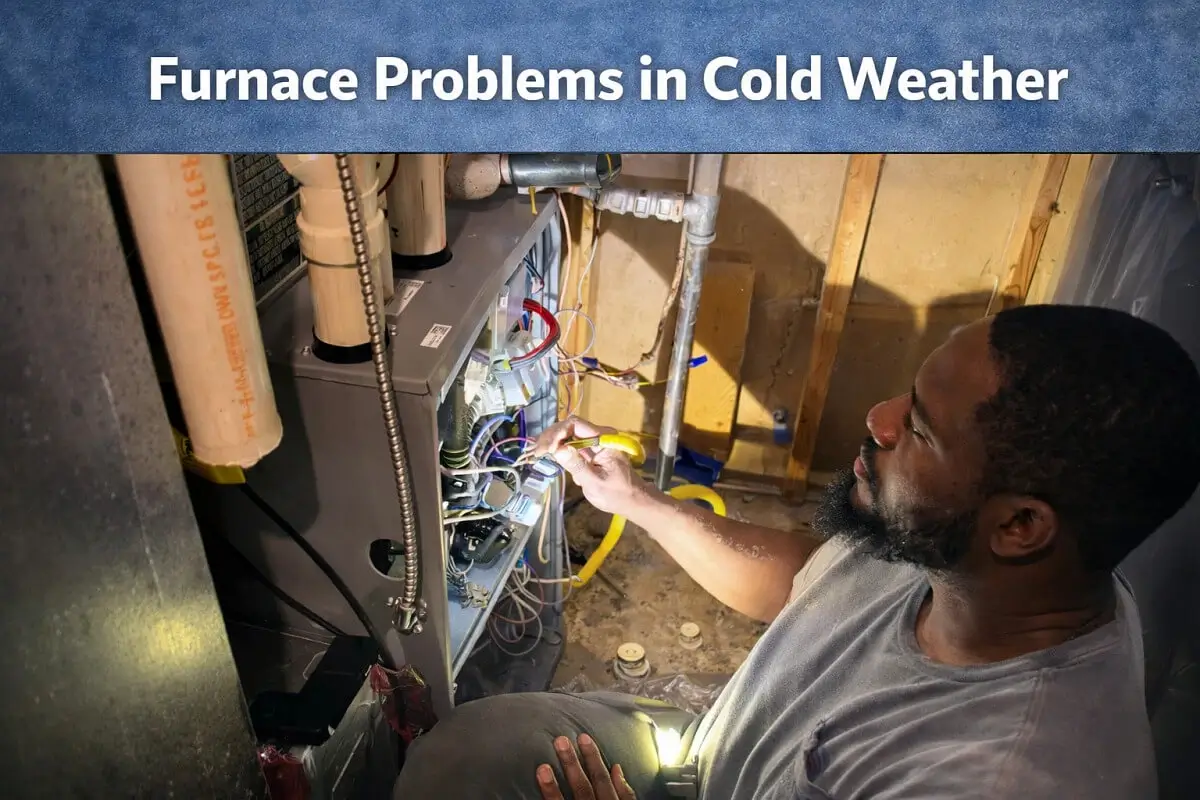

Extreme cold nights in Eastern Pennsylvania can quietly push heating systems beyond their comfort zone. While your home may feel warm at bedtime, overnight temperature drops force furnaces to run longer and harder than usual. By early morning, that steady strain can lead to a shutdown that feels sudden but often has been building for hours.
In many cases, the system does not fail randomly. Instead, safety features step in to protect internal components from overheating, airflow problems, or ignition issues caused by prolonged operation. Understanding why this happens helps homeowners recognize early warning signs before winter stress turns into a complete heating interruption. Homeowners dealing with recurring heating problems can also explore our professional furnace repair services in Eastern Pennsylvania.
Why Extreme Temperature Drops Overwork Furnaces
Temperatures often plunge below the normal limits overnight during the winter season in Eastern Pennsylvania. Thus, your heating system is forced to shift from routine operation to high-output demand almost instantly. This sudden workload change undoubtedly puts a lot of mechanical and electrical strain that’s easy to miss until the damage becomes visible. Routine seasonal heating system maintenance can often reduce this type of winter stress. If you still wonder why a furnace would stop working overnight, here’s your answer!
- Longer heating cycles: When outdoor temperature drops, the difference between the indoor set temperature and the outside air increases dramatically. Your furnace, thus, needs to run extended cycles to restore the balance, often operating far longer than it would during consistent weather patterns.
- Continuous component strain: Blower motors, ignitors, flame sensors, and control boards operate repeatedly with little to almost no pause. The increased electrical load and mechanical movements accelerate wear, especially in aging systems.
- Minimal recovery time: During extreme drops, furnace parts are not allowed to cool down and become stabilized. Without the recovery intervals, heat continues to build up and stress compounds quickly, triggering the safety shutoff mechanism.
Why Do Furnaces Shut Down Overnight During Extreme Cold?
The answer to why a furnace stops working overnight is usually less dramatic than it appears. In fact, most events of overnight shutdowns aren’t catastrophic failures but rather protective responses. Once the furnace operates continuously, with no resting interval, built-in safeguards are automatically triggered, causing the shutdown. For instance:
- The limit switch shuts down the system to prevent extensive damage to the heat exchanger once internal temperatures rise above the safe thresholds.
- Excessive heat buildup due to restricted airflow or prolonged operational time can force an automatic shutdown.
- The gas flow can be cut off as a safety measure once the stressed or dirty flame sensor fails to detect a steady flame.
- Repeated attempts to turn on the furnace during peak demands can weaken the ignitors.
- Protective controls often get tripped due to increased electrical and mechanical load from extended operational hours.
Why Is the Furnace Not Blowing Hot Air During a Cold Snap?
Once the question, “Why is my furnace not blowing hot air during a sudden freeze?” comes up in your mind, remember that the issue often stems from airflow or ventilation disruption. Here are some of the events when cold snaps interfere with heat delivery and combustion cycles.
- High-efficiency furnaces use PVC pipes to vent combustion gases. During extreme cold temperatures, the moisture in the exhaust freezes and blocks the outlet. This further restricts the airflow and forces the system into a safety shutdown mode. Blocked vents and frozen exhaust lines are common issues addressed during winter heating repair visits.
- Ice buildup or snow accumulation can obstruct fresh air intake lines. Without proper combustion air, the furnace can’t start the ignition cycle.
- If the drain line freezes, internal sensors within the furnace detect improper drainage and shut the entire unit down without prior warnings.
- Rapid temperature fluctuations or drafts can cause inaccurate readings, thereby preventing proper heat calls.
Homeowners often report specific symptoms before a full overnight shutdown occurs. These include the furnace running but blowing lukewarm air, repeated clicking sounds without ignition, short cycling during late-night hours, or the thermostat showing a heat call while the unit remains idle. These warning signs typically appear during the coldest part of the night when heating demand peaks.
Common Furnace Issues in Extreme Cold
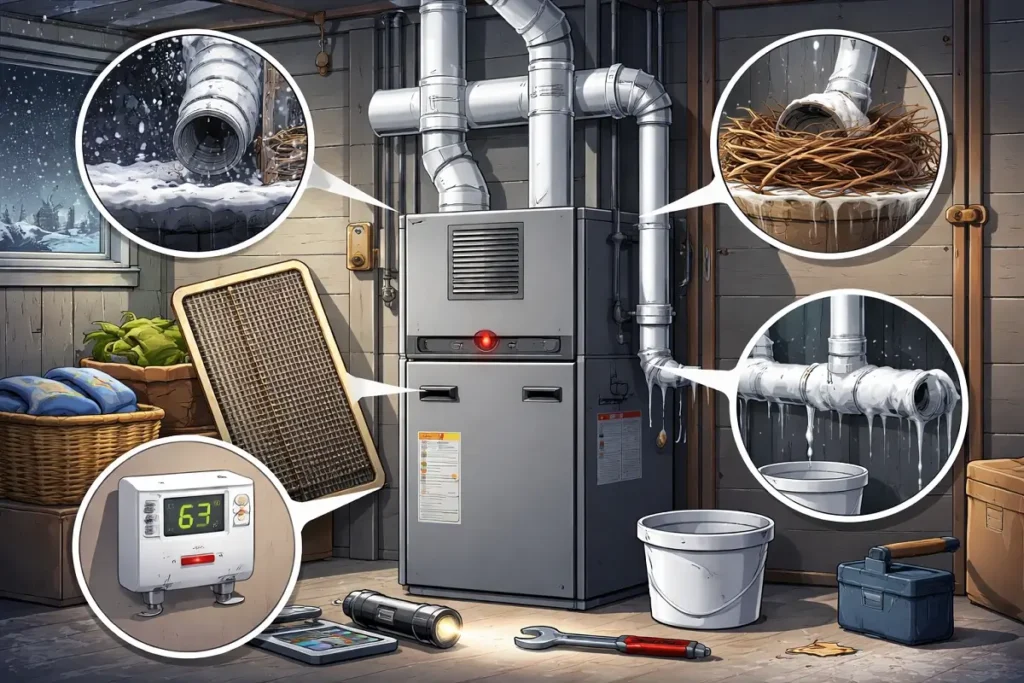
Understanding the most frequent furnace issues in extreme cold can help you distinguish a normal winter strain from a true mechanical failure without any hassles. Having said that, let’s explore some of the common problems your furnace often encounters in extreme freeze cycles.
- Ice or snow can block combustion air intake pipes, thereby starving the burner of oxygen supply and triggering the safety shutdown mechanism.
- Extreme temperature differentials cause metal expansion and contraction. In aging systems, this stress can expose or worsen small hairline fractures.
- High regional demand during cold snaps creates minor supply fluctuations, affecting ignition consistency and flame stability.
- Cold temperatures can cause wiring connectivity and circuit boards to contract in dimensions, thereby increasing the risks of intermittent failures.
- When sensors detect irregular heat output or airflow restrictions, the furnace may start and stop repeatedly to prevent damage.
Why Furnace Failures Often Happen After Midnight?
Most furnace breakdowns aren’t random; they peculiarly follow temperature patterns. Overnight is when the environmental stress factors and system demand collide, causing a system shutdown.
- Pre-dawn hours bring the coldest air, pushing furnaces to generate maximum output.
- Overnight heat loss through walls, ductwork, and insulation forces furnaces to run longer cycles to maintain indoor temperature.
- Reduced off-time increases wear on motors and controls.
- Aging components struggle under sustained, high-load conditions.
In many homes across Montgomery County and Berks County, the sequence follows a predictable pattern: extended evening heating cycles, rising internal temperatures, limited cooling intervals, and eventual safety lockout during pre-dawn hours. What feels sudden in the morning is often the result of stress accumulating throughout the night.
Berks and Montgomery County Winter Risk Factors
Heating failures in Eastern Pennsylvania aren’t just about temperature; they are about regional housing patterns and winter behavior specific to this geography. Having said that, below are some of the specific risk factors you should be aware of.
- Rapid Arctic air drops strain systems without a gradual adjustment time.
- Heavy snowfall can obstruct intake and exhaust pipes, forcing automatic shutdowns.
- Many homes across Berks and Montgomery County are decades old, with original ductwork and aging furnaces that struggle to sustain prolonged high-demand heating cycles.
- Basement installations in older homes create airflow and moisture challenges.
- Draft-prone construction amplifies heat loss, driving longer and stress-heavy furnace cycles.
When to Consider a Professional Heating Inspection?
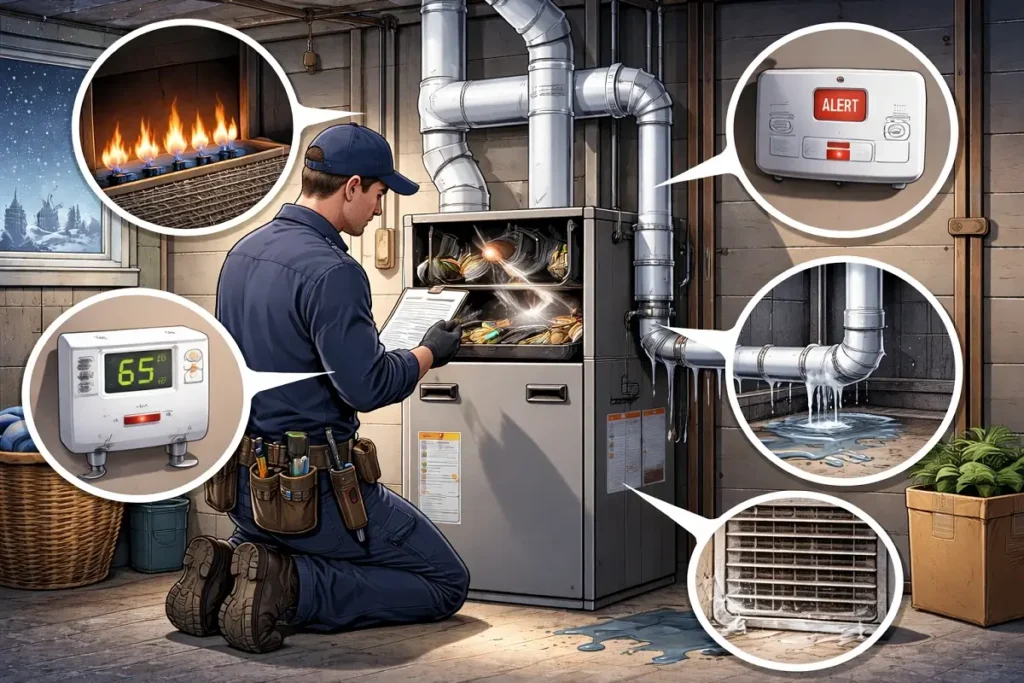
Professional diagnostics can help you identify the stress points before they escalate into costly failures. In situations where the unit won’t restart or the safety lockout persists, emergency heating repair becomes necessary. Apart from this, you should also arrange a heating system inspection in cases like
- Repeated system shutdowns
- Inconsistent temperature output
- Unusual noises after a cold snap
A licensed heating technician can safely diagnose ignition systems, airflow restrictions, venting blockages, and electrical controls before a minor overnight shutdown turns into a major winter failure.
If indoor temperatures fall below 60°F during freezing conditions in areas like Reading, Phoenixville, or Pottstown, the risk of frozen plumbing lines increases significantly. Homeowners concerned about pipe damage can review our frozen pipe repair and prevention services. Furnaces that repeatedly shut down or fail to restart during overnight cold snaps should be evaluated immediately to prevent secondary damage to pipes and interior structures.
If your furnace stopped working during a winter night in Pottstown, you can read our step-by-step emergency guide
Conclusion
Extreme temperature drops don’t just make homes uncomfortable; they place significant mechanical strain on heating systems. Sudden overnight failures occur due to sustained mechanical stress, not random breakdowns. Limited recovery time, longer cycles, and aging components contribute to shutdowns during peak hours. Understanding these patterns allows homeowners across Berks and Montgomery County to recognize early warning signs and address heating stress before a minor overnight shutdown turns into a winter emergency.