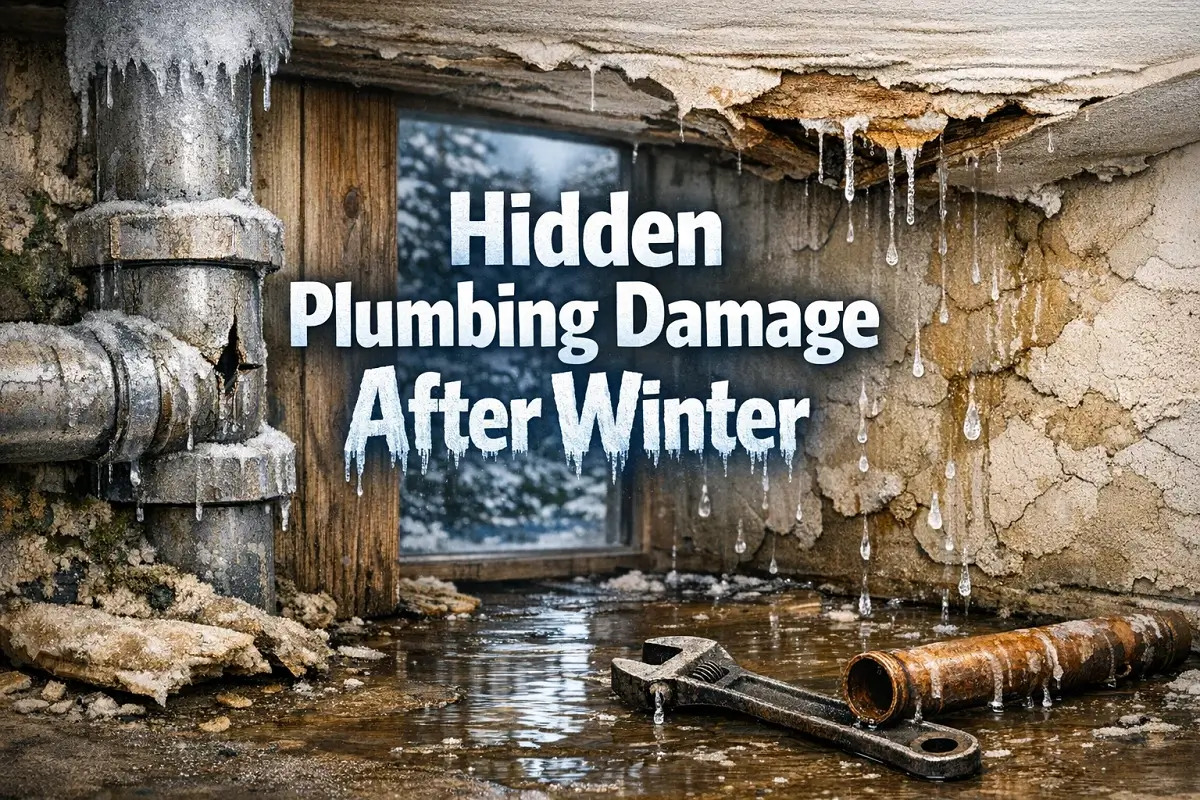

Winter may be ending in Montgomery County, but your plumbing system may still be under stress from ongoing freeze–thaw cycles. In fact, this is when hidden damage starts to surface. The freeze-thaw cycles are quite tough on pipes, fixtures, and bends. When temperatures fluctuate between below and above freezing, trapped water inside pipes expands and contracts, gradually weakening the material.
The tricky part? Most homeowners fail to notice even the slightest of impacts right away. Loosened joints, small fractures, and stressed pipe connections can sit silently behind the walls for weeks. Weeks later, you may begin noticing signs of hidden plumbing damage. That being said, we have articulated a detailed guide on the most common issues that surface gradually with spring’s onset in Pennsylvania homes.
Why Do Plumbing Problems Show Up in Spring?
If you have been wondering why plumbing problems show up in spring, the root cause can be traced back effortlessly to the winter stress. In states like Pennsylvania, plumbing systems are mostly exposed to recurring freeze-thaw cycles. Even when you won’t see a pipe bursting all of a sudden, subtle structural damage may have already started developing beneath the surface. So, by the time spring arrives, new problems aren’t created; rather, the season reveals what stayed hidden during the winter.
Here’s what truly happens behind the scenes.
- When water turns to ice, it expands and presses outward against the pipe’s walls, thereby amplifying the internal pressure.
- With fluctuating temperatures, pipes shrink in cold weather and expand once the mercury levels rise, weakening joints and fittings over time.
- Small hairline fractures can develop but won’t show any sign of leakage right away, making it harder for you to detect any visible damage.
- As frost melts, the ground settles and moves, placing additional strain on underground water and sewer lines.
By the time warmer weather stabilizes, the thaw season exposes these hidden vulnerabilities, usually in the form of leaks, reduced water pressure, and unexpected plumbing failures. These issues are common in Montgomery County due to frequent freeze–thaw cycles.
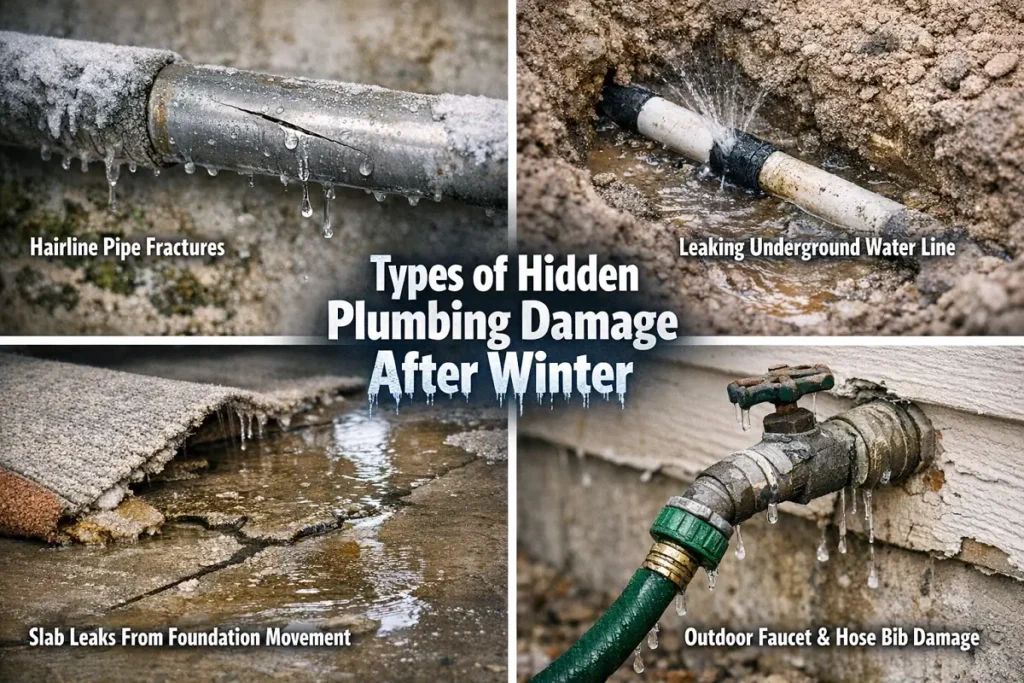
Types of Hidden Plumbing Damage After Winter
Living in Pennsylvania has perhaps taught you one thing: winters here freeze hard, warm up unexpectedly, and then freeze again. This back-and-forth is exactly the reason why your springtime gets filled with worrying about the hidden plumbing damage after winter.
Hairline Pipe Fractures
Once water freezes inside the pipe, it puts pressure on the inner walls but in the outer direction. Even though the material won’t burst straightaway, prolonged pressure often creates minute cracks. Once spring hits and daily use returns to normal, these micro-cracks start widening. These are so minute that they usually get spotted during a professional inspection in Montgomery County.
Leaking Underground Water Line
Once frost leaves the ground, soil expands, softens, and settles unevenly. It often creates a tug force on buried water lines, loosening joints or creating small gaps. As everything happens below the surface, these leaks are mostly identified during professional plumbing inspections.
Slab Leaks From Foundation Movement
Homes built on slabs aren’t immune. Pipes go through a lot of physical stress when the ground underneath shifts after a deep freeze. The resulting leaks are hidden so well that specialized slab leak detection services are often required for accurate identification.
Outdoor Faucet and Hose Bib Damage
Even winterized outdoor fixtures can suffer internal cracking from freezing water. The damage doesn’t become obvious—well, not until you turn the hose on, something frequently caught during seasonal plumbing checks.
Signs Homeowners Should Watch for in Spring
In Montgomery County, spring plumbing problems seldom surface overnight. Winter damage tends to reveal itself gradually, which is why many homeowners overlook these warning signs. Thus, knowing what to look for can make a meaningful difference.
- A small underground or wall leak may run continuously with no obvious signs, causing a gradual rise in the water bills.
- Hairline fractures can cause slow seepage behind the drywall and ceiling, eventually causing discoloration or damp spots.
- Hidden moisture from minor leaks often creates a persistent damp smell before any visible sign appears on the walls.
- Internal pipe cracks or slight line separations can lower water pressure and restrict consistent flow.
- Underground line stress from soil shifting often causes soggy patches to appear long after the thaw cycle.
As these issues develop gradually, over weeks, a thorough local plumbing inspection in Montgomery County after the freeze season can serve as a practical preventive step rather than a reactive repair.
Why Is a Plumbing Inspection After Winter Important?
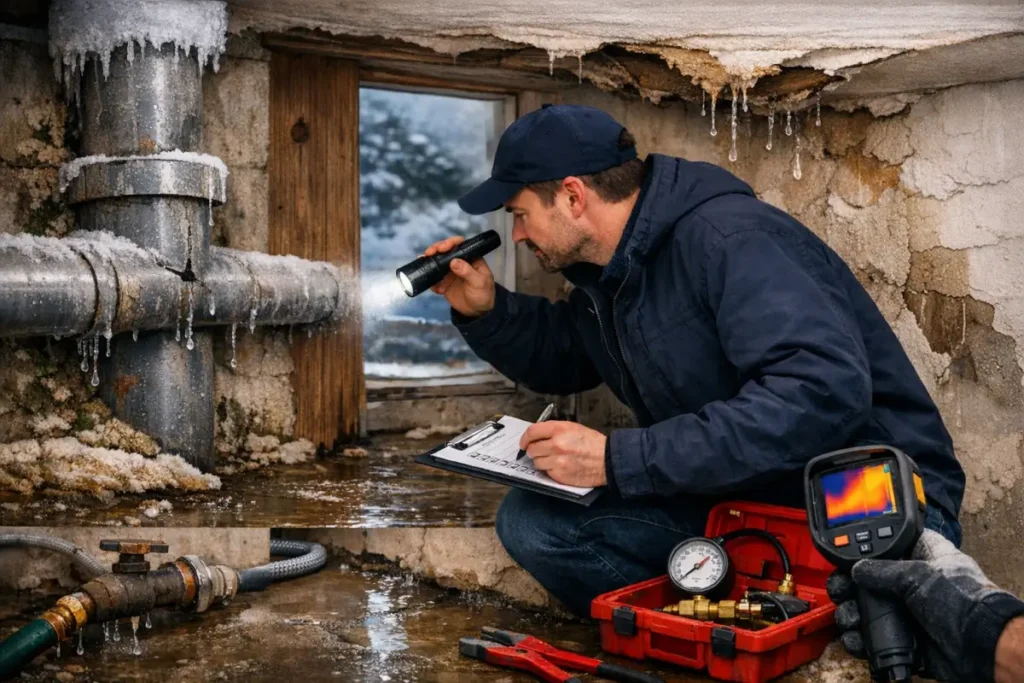
A plumbing inspection after winter in Montgomery County isn’t about assuming something is wrong; it’s about confirming everything is still sound after months of unpredictable freeze-thaw cycles. In climates like Pennsylvania’s, early evaluation makes minor weaknesses preventable from becoming structural concerns.
- Identifying small leaks early minimizes the risks of drywall, flooring, or foundation deterioration.
- Professionals use specialized equipment to detect leaks behind walls or beneath slabs without causing invasive damage.
- Camera inspections reveal misalignments or minor separations caused by soil shifting.
- System pressure checks can expose vulnerable pipe sections before they fail.
Approaching spring with a preventive mindset allows homeowners to address winter-related stress before it escalates into larger, more disruptive plumbing issues.
Pennsylvania-Specific Plumbing Risks
Living in Pennsylvania means dealing with winters that never ease up gently. The combination of snowpack, freezing temperatures, and soil movements creates plumbing stress specific to this region. Here’s how.
- Extended sub-freezing temperatures place significant internal pressure on pipes, even in insulated systems.
- Snow buildup followed by rapid melting saturates soil, increasing ground movement around underground lines.
- Clay-heavy soil can expand when wet and contract when dry, placing recurring stress on buried pipes and foundations.
- Many homes across the state were built decades ago, often with aging pipe materials more vulnerable to freeze-thaw damage.
Preventive Steps Homeowners Can Take
Spring is indeed the ideal time to take a proactive approach. A few simple checks can help identify winter-related issues before they escalate.
- Look for corrosion, small cracks, or moisture around exposed plumbing.
- Turn the outdoor faucets slowly and check for leaks around the handles or internal walls.
- Unexpected movement in the water meter when no water is being used may indicate a hidden leak.
- Watch for damp spots, stains, or musty floors in the basement.
Conclusion
Pennsylvania households often encounter hidden plumbing damage after winter. Shifting soil, freeze-thaw cycles, and aging infrastructure all contribute to subtle issues that only surface in spring. If your home experienced freezing temperatures this winter, now is the time to schedule a professional plumbing inspection in Montgomery County before small leaks turn into costly structural damage.