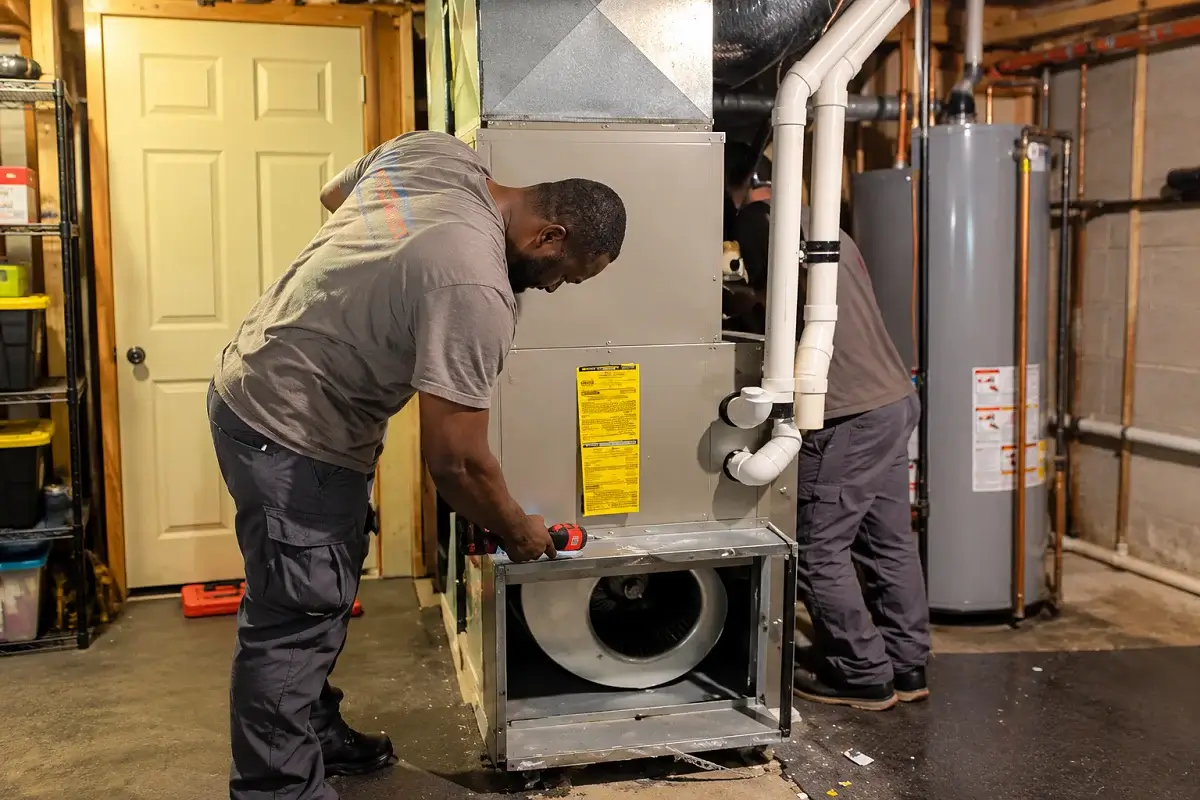

It’s a January night. The thermostat says 68, but the house keeps getting colder. You check the furnace and nothing. A technician comes out the next day and hands you a repair estimate. Now you’re stuck with one question: should I repair or replace my furnace?
At 15 years old, either answer can be right. Age alone doesn’t decide it. The furnace’s condition, the repair cost and how much life it has left do. Here’s how to make that decision without wasting money.
How Long Do Furnaces Last?
So, most well-maintained furnaces last about 15 to 20 years. Some go longer and some fail early. Installation quality, yearly maintenance, correct sizing and how hard the system works each winter all play a part.
ENERGY STAR advises homeowners to consider replacing a furnace or boiler that’s more than 15 years old, especially when repairs are frequent and energy bills keep rising. Notice the word “consider.” Fifteen years is a checkpoint. It isn’t an expiration date.
How long do gas furnaces last?
Most gas furnaces fall in that same 15-to-20-year range. The heat exchanger usually decides the furnace’s fate. Once it cracks, the unit is typically at the end of the road.
How long do propane furnaces last?
Propane furnaces work much like natural gas units and generally last about as long. Plenty of rural Berks County homes run on propane, and the same rule applies: regular maintenance makes the biggest difference.
How long do oil burners last?
Oil burners can run for many years with annual service. But oil burns dirtier than gas. Soot builds up on the nozzle, burner, and heat exchanger. Skip the cleanings and efficiency drops fast. If your home heats with oil, regular oil burning furnace repair and service is what keeps an older system dependable.
How Long Do Carrier, Lennox, Trane and Goodman Furnaces Last?
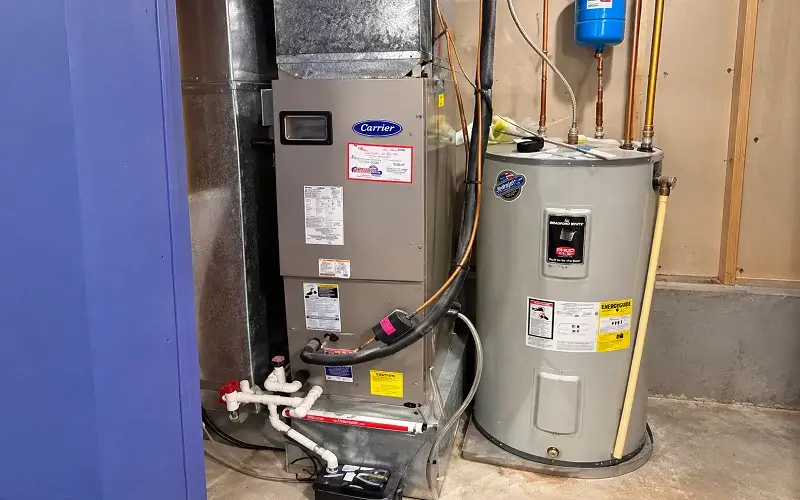
A lot of homeowners search by brand: how long do Carrier, Lennox, Trane, Goodman, Bryant, Payne, Rheem, Ruud and Ducane furnaces last?
Here’s the honest answer. Brand matters less than you’d think. Major manufacturers build furnaces that can reach the same general lifespan range and several brands share parent companies. Carrier, Bryant and Payne belong to one family. Rheem and Ruud belong to another.
What actually separates a furnace that lasts 12 years from one that lasts 22?
- Correct sizing and installation
- Annual tune-ups
- Clean filters and ductwork
- How long and how hard it runs each winter
A well-kept Goodman can easily outlast a neglected premium unit. The logo doesn’t decide it. Care does.
When Repairing a 15-Year-Old Furnace Makes Sense
In the furnace repair vs. replace debate, a repair is usually the smarter move when:
- The fix is minor. Igniters, flame sensors, capacitors, and thermostat issues are common and don’t mean the system is failing.
- It’s the first real problem in years. One breakdown isn’t a pattern.
- The heat exchanger checks out. A technician can inspect it during the visit.
- Energy bills are steady and every room heats evenly.
In these cases, fix it and stay on top of yearly furnace maintenance service. That can buy you several more good winters.
Signs It’s Time to Replace Your Furnace
Replacement starts making more sense when:
- The heat exchanger is cracked. A crack can let combustion gases, including carbon monoxide, into the air your family breathes. That’s a safety problem, not a line item.
- The service calls keep coming. One repair a year on an older unit is normal. Several in one season isn’t.
- Heating bills climb even though your habits haven’t changed.
- Parts are hard to find. Waiting days for a part in February is no fun.
- The gas flame burns yellow and flickers instead of steady blue, or the furnace short-cycles and gets noisy.
The 50% rule
Many contractors use a simple test. If the repair costs more than half the price of a new furnace, replacement usually wins. It’s a rule of thumb, not a law. The furnace’s real condition still matters more.
What You Gain With a New Furnace
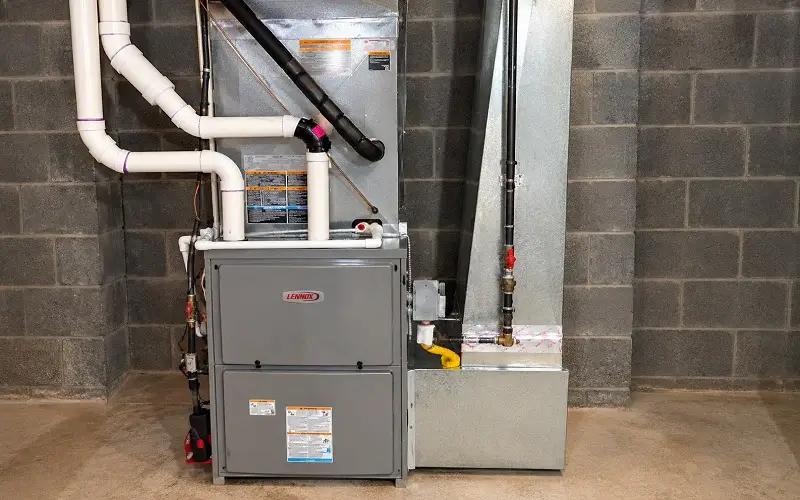
Efficiency is a big part of the math. According to the U.S. Department of Energy, older low-efficiency systems can run at roughly 56% to 70% AFUE, while modern high-efficiency models reach up to 98.5%. AFUE tells you how much of your fuel actually turns into heat.
Plenty of 15-year-old furnaces are standard 80% units. Stepping up matters in Berks County, where the heat runs for months.
A new system also lets you fix problems the old one never solved, like poor sizing or uneven heating. Quality furnace installation matters as much as the equipment. A high-efficiency furnace installed badly won’t perform the way it’s rated.
What Affects the Cost?
Honest pricing can’t be squeezed into one number. Costs depend on:
- Fuel type (gas, propane, or oil), and whether you’re switching
- Efficiency rating and features
- Furnace size for your home
- Venting, chimney, or ductwork changes
- Permits and local code requirements
Always ask for a written estimate showing what’s included. If budget is the worry, review Berks’ financing options before you decide.
Before You Decide
- Ask your furnace repair technician for a full inspection: heat exchanger, burners, blower, and venting.
- Review how many service calls you’ve had in the last two to three years.
- Compare this winter’s heating bills with past winters.
- Get both numbers: the repair cost and a replacement quote.
- Think about how long you’ll stay in the home.
One more thing. Don’t open the furnace cabinet to inspect burners or the heat exchanger yourself. That’s work for a qualified technician. Safe homeowner checks are the thermostat, the filter, the breaker, and making sure vents aren’t blocked.
Frequently Asked Questions
Is a 14-year-old furnace still good?
It can be. If it’s been maintained, heats evenly, and hasn’t needed major repairs, it may have several years left. Start budgeting, but don’t replace it just because of the number.
Should I replace a 20-year-old furnace?
Usually it’s time to plan for it. A 20-year-old furnace is past the typical lifespan, and a major repair at that age rarely pays off.
At what age should a furnace be replaced?
There’s no fixed age. Fifteen years is when ENERGY STAR suggests considering it, but safety, condition, and repair costs should make the final call.
Is a 25-year-old furnace safe?
Not automatically unsafe, but the risk rises with age as metal fatigue weakens the heat exchanger. Get it inspected every year, keep working carbon monoxide detectors, and plan for replacement.
Is it worth repairing a cracked heat exchanger?
On an older furnace, rarely. The repair is costly, and the rest of the unit is aging too. Most homeowners are better off replacing the furnace.
Should I replace my furnace before selling my house?
Not always. But an old or failing furnace can come up during a home inspection and affect negotiations. Get an inspection first so you know where it stands.
Need Help Deciding in Berks County?
If your furnace is 15 years or older and you’re not sure it’s worth fixing, start with an honest inspection. Berks Plumbing & HVAC Specialist helps homeowners in Reading and throughout our Berks County service area with gas, oil, and propane furnace repair, tune-ups, and heating system installation. Heat out tonight? Contact us to schedule service.