
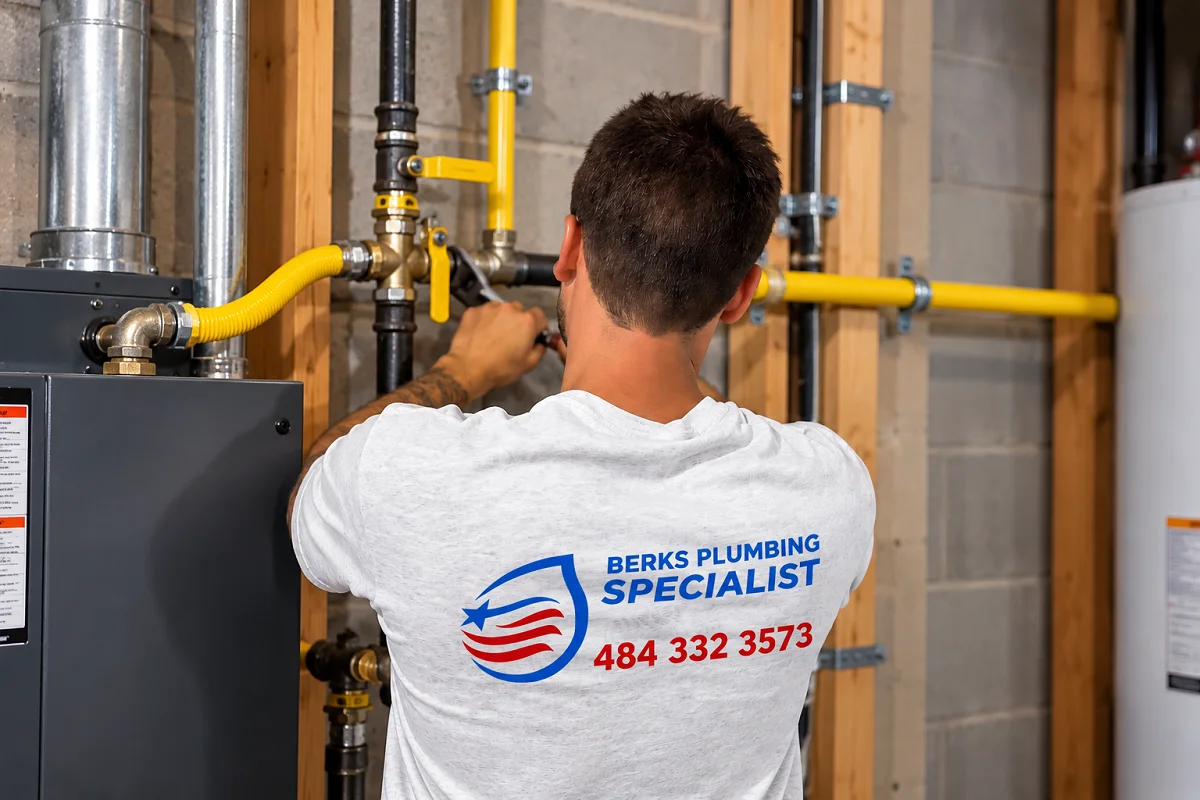

You’ve picked out the new gas range. Or maybe last winter’s power outage finally convinced you to get a standby generator. Then comes the question: do you need a licensed plumber to run a gas line, or can you handle it yourself?
The short answer for most homeowners: hire a qualified professional and expect to need a permit. Gas line work isn’t like swapping a faucet. A small mistake can cause a leak, a fire, or carbon monoxide problems. Here’s what you should know before anyone cuts into a pipe.
Do You Need a Licensed Plumber to Run a Gas Line?
It depends on where you live, but in practice, yes. Professional work is the safe and usually required route.
Pennsylvania is a little unusual here. The state doesn’t issue a statewide plumber’s license. Licensing is handled locally, so the rules can change from one municipality to the next. Some places have strict licensing. Others have very little.
The City of Reading, for example, has its own Plumbing Board of Examiners. If you’re inside city limits, that’s where local plumbing licensing is handled. Outside Reading, in a township or borough elsewhere in Berks County, check with your municipality or its code official.
Either way, a few things stay true almost everywhere:
- Gas piping has to meet code
- Most gas line work needs a permit and an inspection
- The person doing the work should be qualified, insured, and familiar with local rules
So even where a specific license isn’t required, hiring an experienced pro is the smart move.
Do I Need a Permit to Install a Gas Line?
So, do I need a permit to install a gas line? In most cases, yes.
New gas lines, extensions, and new appliance connections usually require a permit. That’s what triggers an inspection, and the inspection is what confirms the piping is sized right, connected right, and holding pressure without leaks.
In Pennsylvania, building and code permitting is generally handled by your municipality or its third-party code agency. The Pennsylvania Department of Labor & Industry is a good starting point for understanding contractor and construction code requirements in the state.
Skipping the permit might seem like a shortcut. But it can cause real headaches later:
- Problems passing a home inspection when you sell
- Insurance trouble if a fire or leak happens
- Having to open up walls so the work can be inspected after the fact
A good contractor will usually pull the permit for you. If someone suggests skipping it, that’s a red flag.
Residential Gas Line Requirements
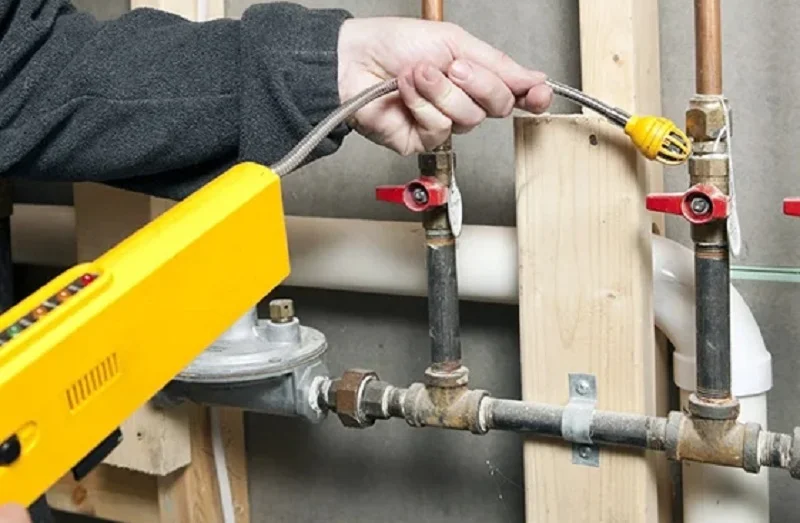
Exact residential gas line requirements depend on the code your municipality has adopted. But the basics are the same in most homes.
Correct pipe sizing
This is where a lot of DIY jobs go wrong. The gas pipe has to be sized for the total demand of every gas appliance on the system, not just the new one. If you add a range or generator to a line that’s already near capacity, everything on it can be starved for gas. That can mean weak flames, poor performance, or appliances that won’t run properly.
Approved materials
Only certain materials are approved for gas. Black iron and corrugated stainless steel tubing (CSST) are common indoors. Each has specific installation rules. CSST, for instance, has bonding requirements meant to reduce lightning-related damage.
Shutoff valves and sediment traps
Gas appliances generally need an accessible shutoff valve nearby. Many also need a sediment trap, also called a drip leg, to catch debris before it reaches the appliance.
Pressure testing
New piping is usually pressure tested before it’s put into service. This is one of the main things an inspector looks at.
Underground Gas Piping Requirements
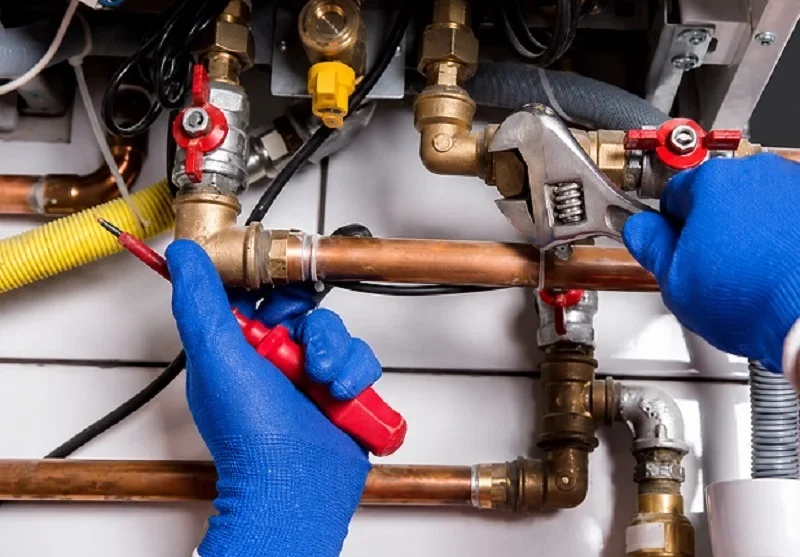
Running gas to a standby generator often means going outside, and sometimes underground. Underground gas piping requirements are stricter in a few ways:
- Approved underground material. Polyethylene (PE) gas pipe is common for buried runs, but it’s typically allowed only outdoors and underground.
- Proper burial depth. Code sets a minimum depth, and it varies based on the situation.
- Tracer wire. Plastic pipe is usually buried with a tracer wire so it can be found later.
- Protection where the pipe comes out of the ground. Transitions from underground to above ground need approved fittings.
And before anyone digs, call 811. Pennsylvania requires a call to PA One Call before excavating so buried utility lines can be marked. Hitting an existing gas or electric line is dangerous and expensive.
What About a Gas Line for a Generator?
A standby generator usually involves more than a stove hookup.
Generators can use a lot of gas. Your existing meter and piping may not be large enough to handle a generator plus your furnace, water heater, and range running at the same time. In some cases, the gas utility needs to upgrade the meter or regulator.
Then there’s the electrical side. A standby generator needs a transfer switch, and that work usually requires its own electrical permit and a qualified electrician.
Bottom line: a generator gas line is a sizing and coordination job, not just a pipe job.
Can You Run a Gas Line Yourself?
Some homeowners ask whether they can do it themselves to save money. Even where local rules allow it, we don’t recommend it.
Here’s why:
- Gas leaks can cause fires or explosions
- Bad connections or poor venting can create carbon monoxide risks
- Pipe sizing mistakes can affect every gas appliance in your home
- Unpermitted work can create insurance and resale problems
Safe homeowner tasks around gas are limited. Know where your gas shutoff is. Keep appliances clear. Make sure you have working carbon monoxide detectors. Leave the piping to a professional.
Signs of a Gas Leak
Whether a line is new or old, know these warning signs:
- A rotten egg or sulfur smell
- A hissing sound near gas lines or appliances
- Dead plants or bubbling in wet ground over a buried line
If you smell gas, leave the house right away. Don’t flip light switches, use your phone inside, or try to find the leak. Once you’re outside, call your gas utility or 911.
After the utility makes the situation safe, a qualified plumber can handle gas leak detection and gas line repair.
Frequently Asked Questions
Can a plumber install a gas line?
Yes. Many plumbers install gas piping, as long as they meet local licensing and code requirements. Ask whether they handle gas work and will pull the permit.
Does a gas stove hookup need a permit?
Often, yes, especially if a new line or extension is involved. Replacing a stove on an existing, properly installed connection may have different rules. Check with your municipality.
How long does it take to run a gas line?
A simple indoor run for a range can often be done fairly quickly. Longer runs, generator lines, and underground work take more time, plus permit and inspection scheduling.
Is CSST safe for gas lines?
CSST is an approved material when installed correctly, including proper bonding. Installation must follow the manufacturer’s instructions and local code.
Who do I call to check a gas line?
For a suspected leak, call your gas utility first. For new lines, repairs, or inspections, call a qualified plumber familiar with your local code.
Planning a gas line in Reading or Berks County?
Whether it’s a new range or a standby generator, the job goes better when it’s sized right, permitted and inspected. Berks Plumbing & HVAC Specialist helps homeowners in Reading and throughout our Berks County service area with gas line installation and repair. Contact us to talk about your project.