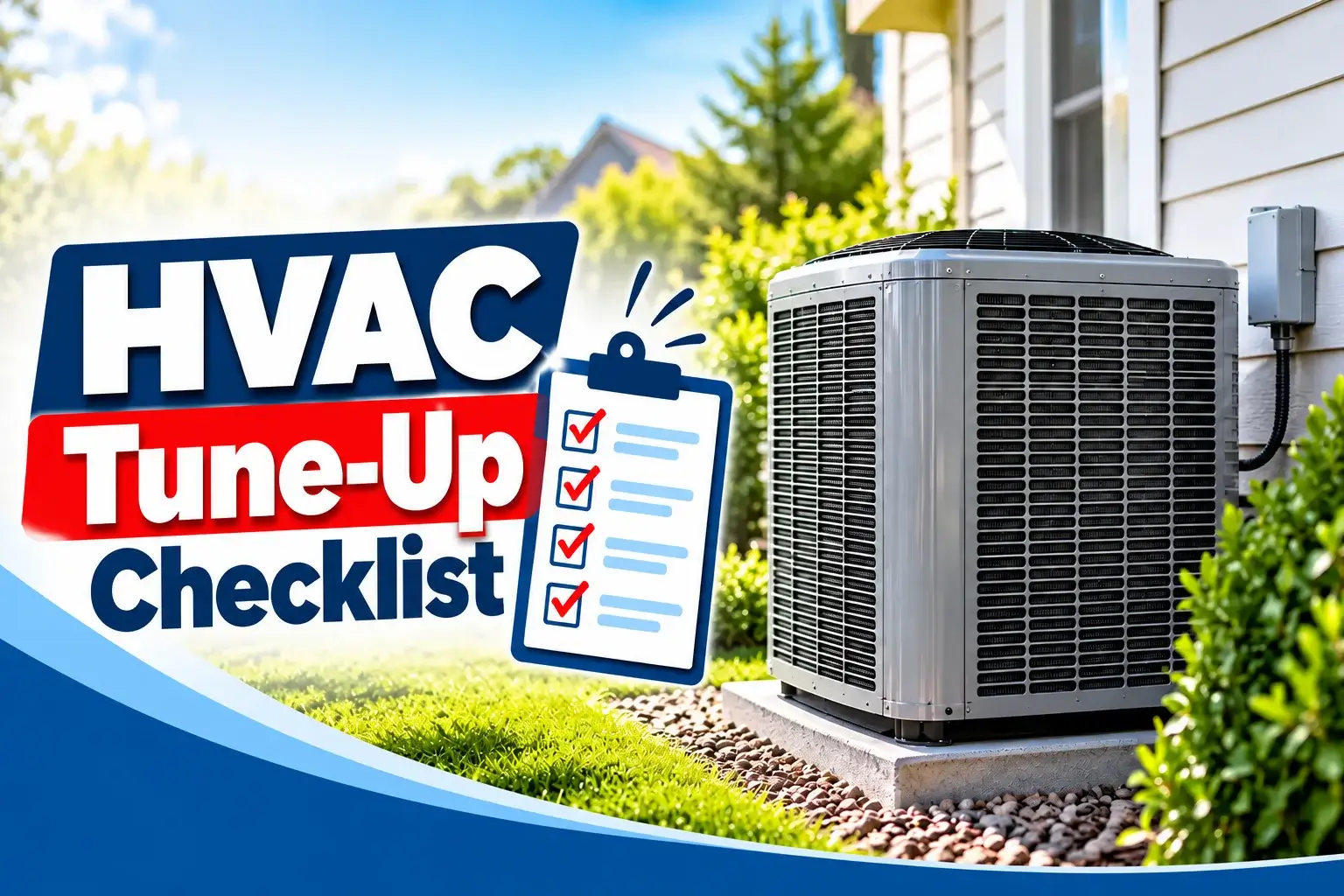

A complete HVAC tune-up checklist covers the thermostat, electrical connections, mechanical parts, condensate drain, ductwork and vents and the burner or heat exchanger, plus safety devices like CO and smoke detectors. Most homeowners only check the furnace. But the rest of your heating system can fail too, and a full tune-up catches those problems before winter.
Pennsylvania winters put real demand on a heating system and a rushed once-over rarely catches everything that actually causes mid-winter breakdowns. This checklist covers the whole system, not just the burner, so you know what a thorough inspection should actually include before the cold sets in.
Why a Whole-System Check Matters, Not Just the Furnace
A furnace tune-up focused only on burners and heat exchangers is necessary but incomplete. Airflow problems in the ductwork, a miscalibrated thermostat or a neglected humidifier can all undercut a perfectly serviced furnace. If you want the detailed furnace-only walkthrough — burner inspection, flame sensors, heat exchanger safety check, blower motor testing — our fall furnace tune-up guide covers that step by step. This article covers everything around it.
The Whole-Home HVAC Tune-Up Checklist
According to ENERGY STAR, a typical maintenance check-up should confirm thermostat settings, tighten electrical connections, lubricate moving parts, check the condensate drain, and test the system’s start-up and shutdown controls — with additional heating-specific checks for gas or oil connections, burner combustion and the heat exchanger.
| Checklist Item | What It Catches | Who Handles It |
| Thermostat accuracy | Short cycling, uneven heat, wasted energy | Homeowner check; technician calibration |
| Ductwork and vents | Airflow loss, hot/cold rooms, duct leaks | Homeowner visual check; technician sealing |
| Air filter | Restricted airflow, higher bills, system strain | Homeowner — monthly during peak season |
| Electrical connections | Intermittent shutoffs, fire risk | Technician only |
| Condensate drain | Water damage, humidity issues | Technician |
| Humidifier | Dry air, wood/finish damage, static | Technician |
| CO and smoke detectors | Undetected carbon monoxide exposure | Homeowner — test monthly |
| Burner / heat exchanger | Cracks that allow CO into circulated air | Technician only — see furnace tune-up guide |
Ductwork and Vents
Leaky or blocked ductwork is one of the most overlooked items on a typical checklist. Duct leaks can waste a meaningful share of the air you’re paying to heat before it ever reaches a room and that shows up as high bills and rooms that never quite reach temperature — a pattern that’s especially common in Berks County’s older housing stock. Confirm vents and returns are open and unobstructed by furniture or rugs and have ductwork inspected for leaks if certain rooms consistently run cold.
Whole-Home CO and Smoke Detector Placement
A furnace-specific tune-up tests the CO sensor at the unit but that’s not the same as confirming your home’s detectors are placed and working correctly. The CDC recommends having any gas, oil or coal-burning heating system serviced annually specifically because a cracked heat exchanger or blocked vent can let carbon monoxide leak into the house without warning. Install at least one CO detector per floor, test them monthly, and keep them a reasonable distance from the furnace itself to avoid false alarms during normal startup.
Need your ductwork, humidifier, or whole-system airflow checked alongside your furnace? Berks Plumbing & HVAC Specialist handles the full picture. Call (484) 332-3573.
Four Areas Every Technician Checks at Startup
If you’re wondering what a professional actually verifies during a seasonal check-up, ENERGY STAR’s guidance breaks it down into four core areas: thermostat settings and controls, electrical connections and moving parts, the condensate pump, and — for heating specifically — gas or oil connections, burner combustion, and heat exchanger condition. Everything else on a typical checklist supports one of those four categories.
When It’s Not a Tune-Up Problem: Heating System Not Working Properly
A tune-up is preventive. If your heating system is already not working properly — no heat at all, short cycling, a pilot light that won’t stay lit, or a burning smell that doesn’t clear — that’s a repair situation, not a maintenance one, and waiting for a scheduled tune-up isn’t the right move. See our guide on what to do when a furnace stops working in cold weather, or contact our heating repair team directly if you’re dealing with a no-heat situation right now.
Repair or Replace? The $5,000 Rule
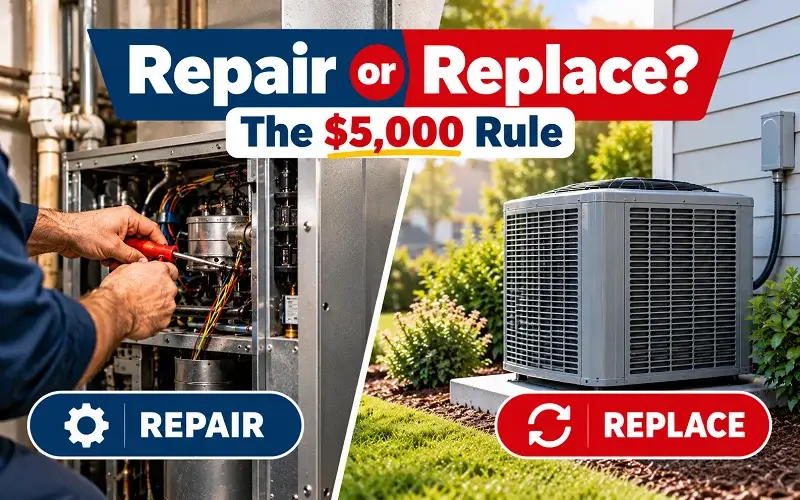
If your technician finds a problem during the check-up, the $5,000 rule is a common industry shortcut for deciding what to do next: multiply your system’s age in years by the estimated repair cost. If the result is over $5,000, replacement is usually the better long-term value; under $5,000, repair is often the more cost-effective choice.
Example: a 12-year-old furnace needing a $500 repair comes to $6,000 — past the threshold, so replacement is worth considering. A 6-year-old system needing the same $500 repair comes to $3,000 — well under the threshold, so repair is the more reasonable call. It’s a rule of thumb, not a law — warranty status, repair history, and overall system condition still matter — but it’s a fast, honest way to frame the decision instead of guessing.
If a repair estimate has you running the numbers, we’ll give you a straight answer on repair vs. replace — no upsell. Call (484) 332-3573.
Do I Need My HVAC Serviced Before Winter?
Yes. Furnaces that sit idle all summer accumulate dust and loosen connections that don’t show up until the system is asked to run continuously — which, if you wait for the first cold snap, is exactly the wrong moment to find out. Timing matters too: scheduling before the season’s first hard freeze means shorter wait times and more room to fix anything found before you actually need the heat. Our fall furnace tune-up guide covers the ideal scheduling window in more detail.
Quick Checklist
- Confirm thermostat accuracy and programming
- Check filter and replace if dirty (monthly during peak season)
- Inspect vents and ductwork for blockages or leaks
- Test CO and smoke detectors on every floor
- Check humidifier operation if your system has one
- Schedule a professional tune-up for electrical, condensate, and burner/heat exchanger checks
- If something’s already wrong, treat it as a repair — not a maintenance — issue
Frequently Asked Questions
What does a seasonal HVAC tune-up include?
A professional tune-up typically covers thermostat calibration, electrical connections, lubrication of moving parts, the condensate drain, filter condition, and — for heating systems — burner combustion and heat exchanger safety. See our furnace tune-up guide for the full technician-level walkthrough.
What are four areas that need to be checked during HVAC startup?
Per ENERGY STAR: thermostat settings and controls, electrical connections and moving parts, the condensate drain, and (for heating) gas or oil connections with burner and heat exchanger condition.
What is the $5,000 rule for HVAC systems?
Multiply your system’s age by the estimated repair cost. Over $5,000, replacement is usually the better value; under $5,000, repair typically makes more sense. It’s a guideline, not a hard rule.
Do I need my HVAC serviced before winter?
Yes — ideally before the first sustained cold stretch, while appointment availability is still good and there’s time to fix anything the technician finds.