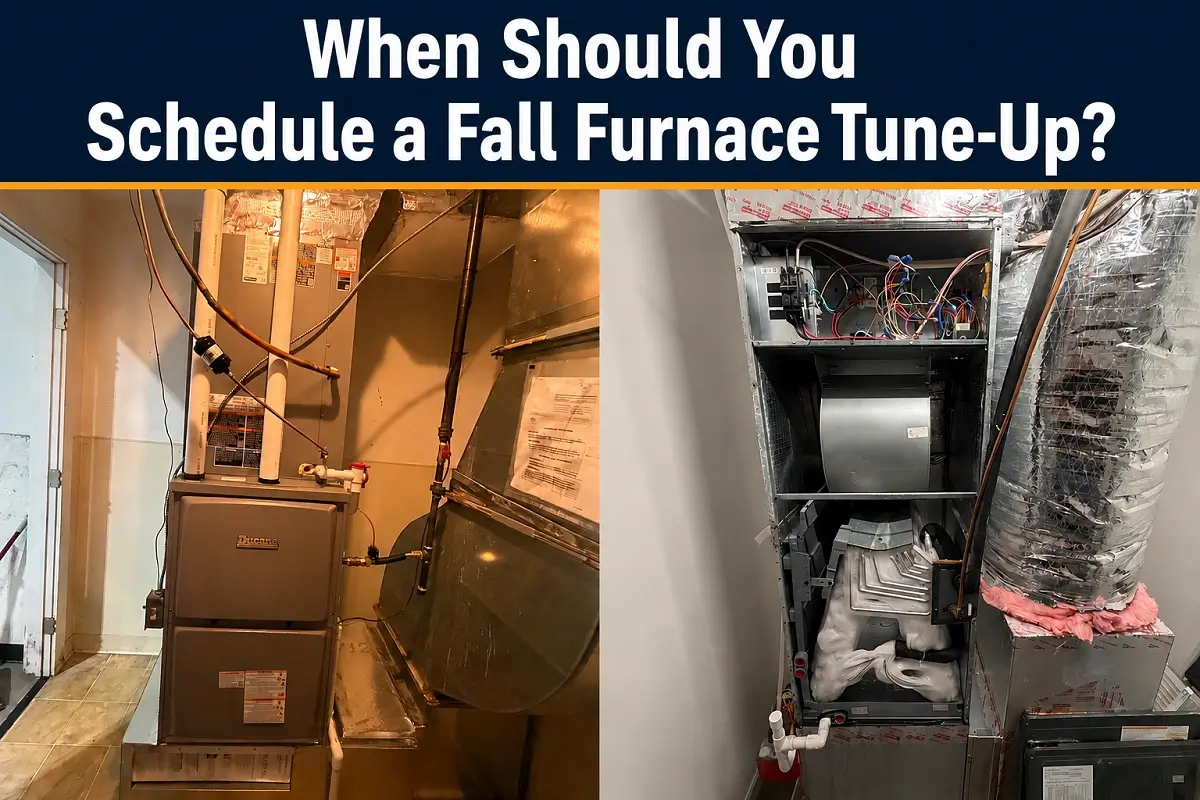

Book your fall furnace tune-up in September or early October, before the first hard freeze hits Berks County. Fall is the slow season for HVAC companies, so appointments are easier to get and technicians have time to fix anything they find before you actually need the heat. Homes on oil or propane in rural Berks County should schedule earliest, since fuel delivery and older equipment add extra prep time.
Reading and Wyomissing homeowners usually think about their furnace the same week the first cold front rolls through — right when every other HVAC company in Berks County gets the same idea. By then, the easy appointment window has already closed. Getting furnace maintenance before winter actually arrives is what keeps that scramble from happening in the first place.
Is Your Furnace Ready for the Fall Heating Season?
Aim for September through the first week or two of October. That’s the window between air conditioning season winding down and the first sustained cold stretch, and it’s when technicians have the most open slots on the calendar. Building that window into your annual furnace maintenance schedule means you’re never the homeowner competing with emergency calls in December.
Waiting past that window doesn’t just mean a longer hold time for scheduling. Once temperatures drop and everyone flips their heat on for the first time, HVAC companies get flooded with no-heat calls from furnaces that sat unused all summer and finally show their problems. You end up competing with actual emergencies for a same-week slot, and if your tune-up turns up something like a worn igniter or a cracked heat exchanger, there’s no comfortable buffer left to fix it before you need the heat running around the clock.
Berks County’s weather swings fast once fall sets in — homes out toward Boyertown and Kutztown can go from mild afternoons to overnight frost within a couple of weeks. Booking early gives you room to actually use that window instead of racing it.
Why Timing Actually Matters, Not Just Getting It Done Eventually
A furnace that’s been idle since March accumulates dust on the burners, and connections can loosen from months of thermal expansion and contraction. None of that shows up until the system is asked to run — which, if you wait until the cold arrives, is exactly the wrong moment to find out. This is exactly what furnace preventive maintenance is built to catch — small wear that’s cheap to fix in September and expensive to ignore in January.
There’s also a cost side to this that’s easy to overlook. According to ENERGY STAR, the average home spends close to $1,900 a year on energy bills, and roughly half of that goes to heating and cooling — a dirty, unmaintained system pushes that number higher every month it runs inefficiently. A tune-up before the season starts is what keeps that number from creeping up in December and January when the furnace is working hardest.
And then there’s the safety piece. The CDC recommends having any gas, oil, or coal-burning heating system serviced by a qualified technician every year, specifically because a cracked heat exchanger or blocked vent can let carbon monoxide leak into the house without any warning. That’s not a risk worth carrying through an entire Berks County winter to save a phone call in September.
What Happens During a Fall Furnace Tune-Up?
Most tune-ups take about an hour and follow the same core heating system maintenance checklist:
Step 1 — Thermostat check. The technician confirms your thermostat is reading temperature accurately and communicating properly with the furnace.
Step 2 — Electrical connections. All wiring is inspected and tightened. Loose connections are a common cause of furnaces that shut off intermittently for no obvious reason.
Step 3 — Burner and heat exchanger inspection. Burners are cleaned and the heat exchanger is checked for cracks or corrosion — the single most important safety check in the whole visit.
Step 4 — Blower motor and belt. The blower is tested for proper operation, and any belt is checked for wear or slipping.
Step 5 — Filter check. A clogged filter is the easiest thing to miss and the easiest thing to fix — it’s replaced or cleaned if needed.
Step 6 — Safety controls and CO test. Every safety switch and sensor is tested, and the technician checks for carbon monoxide leaks before signing off.
If our licensed HVAC team finds something during that process, we’ll walk you through what it means and what your options are — that’s different from a repair visit, and it’s worth knowing the difference before you book.
Gas, Oil, or Propane — Does Your Fuel Type Change the Timeline?
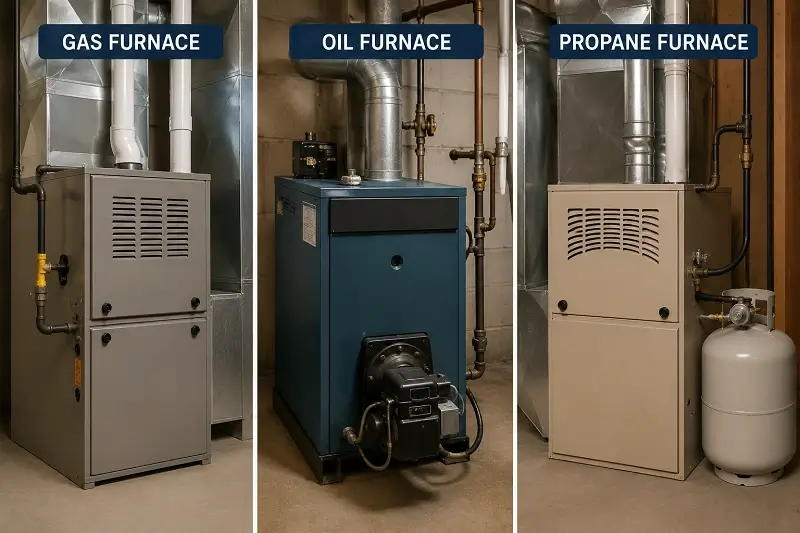
It does. Furnace seasonal maintenance looks a little different depending on what your system runs on, and it’s the piece most furnace guides skip entirely. Fuel type affects both what the tune-up covers and how early you should book it.
| Fuel Type | What Changes at Tune-Up Time | Common in Berks County |
| Natural gas | Fastest to service — burner and ignition check, no fuel delivery coordination needed | Reading, Wyomissing, Sinking Spring — municipal gas lines |
| Oil | Needs nozzle, filter, and strainer service in addition to the standard check; book earliest since older oil systems show more wear. | Oley, Fleetwood, Maxatawny — common in older rural homes |
| Propane | Similar scope to gas, but tank levels and delivery schedules should be confirmed before the season starts. | Birdsboro, Douglassville — mixed municipal and rural areas |
If you’re on oil or propane and haven’t had service since last winter, that’s the strongest reason to book in September rather than October.
Should You Get a Tune-Up If Your Furnace Seems Fine?
Yes — the benefits of furnace maintenance show up whether or not anything seems wrong right now. A furnace can run and still be inefficient, and the problems that cause mid-winter breakdowns — a worn ignitor, a weak flame sensor, a heat exchanger developing hairline cracks — usually don’t announce themselves until the system fails outright. Annual maintenance is also what keeps most manufacturer warranties valid, and it’s often the difference between a furnace that lasts its full expected lifespan and one that needs early replacement.
If your furnace is already 15 years or older, a fall tune-up is also a good moment to have an honest conversation about repair versus replacement while you still have time to plan it, rather than deciding in a hurry after a breakdown.
How Do You Know If Your Furnace Needs Attention Before Winter?
Don’t wait for a full breakdown to find out something’s wrong. Watch for:
- Rising energy bills with no change in how you’re using the thermostat
- Uneven heating, where some rooms stay cold no matter the setting
- Short cycling — the furnace turns on and off repeatedly instead of running a full cycle
- Unusual smells beyond the faint dust smell of the season’s first run
- Banging, rattling, or squealing when the system starts up
- A pilot light or igniter that won’t stay lit
Homes around Sinking Spring and Shillington running older systems tend to show these signs first, simply because those units have logged the most winters. If any of this sounds familiar, don’t wait for your scheduled fall slot — call and get it looked at now.
Ready to Book Your Fall Furnace Tune-Up?
The best time to find out your furnace needs work is September, not the first freezing night of the year. If your system is overdue, or you just want it checked before the season starts, our licensed team makes it simple.
Whether you need a routine tune-up, a repair, or an honest read on whether it’s time to replace your system — we’re available 24/7 across Reading, PA and all of Berks County. For homes dealing with wider seasonal wear, our guide to Pennsylvania weather and HVAC damage is worth a look too.
Call (484) 332-3573 — available 24 hours a day, 7 days a week. Or contact us online to schedule your fall furnace tune-up.
Frequently Asked Questions
When should I get my furnace serviced?
September through early October is ideal — before the first sustained cold stretch and before HVAC companies get busy with no-heat emergencies. If it’s already winter and you haven’t had it serviced, it’s still worth booking; better late than after a breakdown.
How often should a furnace be serviced?
Once a year is the standard answer to how often you should tune up your furnace for most Berks County homes. Our full guide on how often a furnace should be serviced breaks down when twice-a-year service makes sense for older systems.
What does a furnace tune-up include and how long does a furnace tune-up take?
A full inspection of the burners, heat exchanger, blower, electrical connections, filter, and safety controls, plus a carbon monoxide check. Most visits take about an hour.
How to prepare your furnace for winter?
Replace the air filter, clear anything stored near the furnace, and make sure outdoor vents aren’t blocked by debris — then let the fall tune-up handle the rest. If you want the full walkthrough, see our guide on maintenance versus service.
Is a fall tune-up worth it if my furnace is newer?
Yes. Newer systems still accumulate dust and still need the safety checks — skipping maintenance is also one of the fastest ways to void a manufacturer’s warranty.