
Yes, cold weather affects your hot water heater. The water entering your home gets significantly colder in fall and winter, so the unit has to run longer and use more energy to reach your thermostat setting.
This isn’t a malfunction — it’s the heating job getting bigger. A wider gap between incoming water temperature and your set temperature means more work every single cycle.
Berks County homes on private well water often see incoming temperatures drop even further than municipal customers, which can make the fall workload jump more noticeably in towns like Oley, Fleetwood, and Hamburg.
Once mornings turn cold across Berks County, homeowners in Wyomissing and Sinking Spring start noticing their shower takes a few extra seconds to heat up. By December, some households in Oley and Fleetwood running on private wells notice it even more. That’s not in your head — it’s your water heater carrying a heavier load than it did in July.
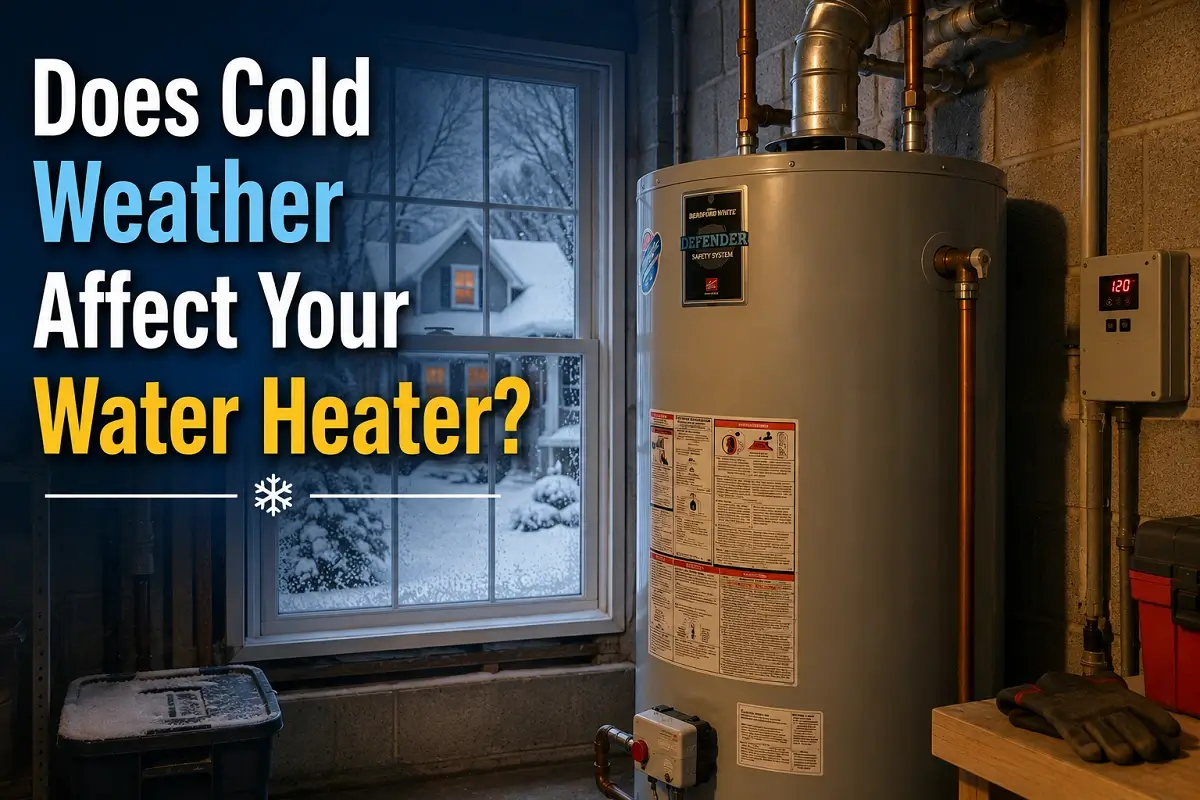
Does Cold Weather Affect Your Water Heater?
Yes. A water heater’s job is to raise incoming water to a set temperature, and in fall and winter that incoming water starts out considerably colder than it does in summer. The bigger that starting gap, the longer the burner or heating element has to run to close it.
Think of it like heating a pot of water on the stove. Water starting at room temperature reaches a boil faster than water starting from the fridge. Your water heater faces the same math every time someone turns on a faucet — it’s just doing it dozens of times a day, year-round.
For most Berks County homes this shows up as small, gradual changes: the burner cycling on more often, the tank taking a bit longer to recover between showers, or a slight uptick on the gas or electric bill. None of that means something is broken. It means the system is working through its normal seasonal load.
Why Does Hot Water Run Out Faster in Winter?
A few things stack on top of each other once temperatures drop, and together they explain why the same 50-gallon tank that felt endless in July can feel tight by January.
- Colder incoming water widens the temperature gap. The heater has more distance to cover to reach your set temperature, so each heating cycle takes longer.
- Recovery time slows down. Because each cycle takes longer, the tank takes longer to refill its hot water supply after use — so back-to-back showers or a shower right after laundry are more likely to run cold.
- Household hot water demand goes up. Longer showers, more laundry, and more dishwasher use are normal in colder months, and that added demand meets a system that’s already working harder.
- Unconditioned installation spaces get colder too. Water heaters installed in a basement, garage, or utility room lose heat faster to a colder surrounding space, which adds to the workload on top of colder incoming water.
- Sediment settles faster under added strain. Minerals that build up at the bottom of the tank interfere with heating efficiency, and a unit running more cycles pushes that buildup issue along faster.
What Does This Mean for Your Fall Energy Bills?
A water heater that runs longer and cycles more often uses more energy to do it — that part is straightforward. The size of the increase depends on your unit’s age, its efficiency rating, and how it’s insulated. Older, uninsulated tanks tend to see the biggest seasonal jump. ENERGY STAR points out that water heating is one of the larger energy uses in a typical home, which is exactly why the fall workload increase shows up on the bill instead of staying invisible.
If your unit is more than eight to ten years old, this is also a reasonable time to have it looked at before the coldest months hit — our guide on maximizing water heater efficiency covers practical ways to bring the seasonal cost down without replacing the unit.
Tank or Tankless — Which Struggles More in Cold Weather?
Every water heater type feels colder incoming water. How much it shows depends on the technology.
| System Type | What Happens in Cold Weather | Best Used For | Common In |
| Traditional Tank | Runs longer, more frequent cycles; recovery time between uses slows the most | Steady, whole-home demand | Reading, West Reading, Kenhorst |
| Tankless (Gas) | Yes — colder incoming water can affect a tankless unit too, since it lowers the flow rate needed to hit target temperature; extreme cold can trigger error codes on undersized units. | On-demand hot water, space savings | Wyomissing, Shillington, Boyertown |
| Tankless (Electric) | Most sensitive to cold incoming water; flow rate drops noticeably to maintain temperature | Smaller households, point-of-use | Newer construction, Spring Township |
| Heat Pump Water Heater | Efficiency drops in colder ambient air unless installed in a conditioned space. | Energy-conscious households | Newer homes, Muhlenberg Township |
So yes — cold weather can affect a tankless hot water heater, not just a tank unit. The mechanism is slightly different (flow rate and unit sizing rather than tank recovery time), but the underlying cause is the same colder incoming water. For a full side-by-side on which setup fits your household, see our tank vs. tankless water heater guide for PA homeowners.
Does Well Water Make This Worse for Berks County Homes?
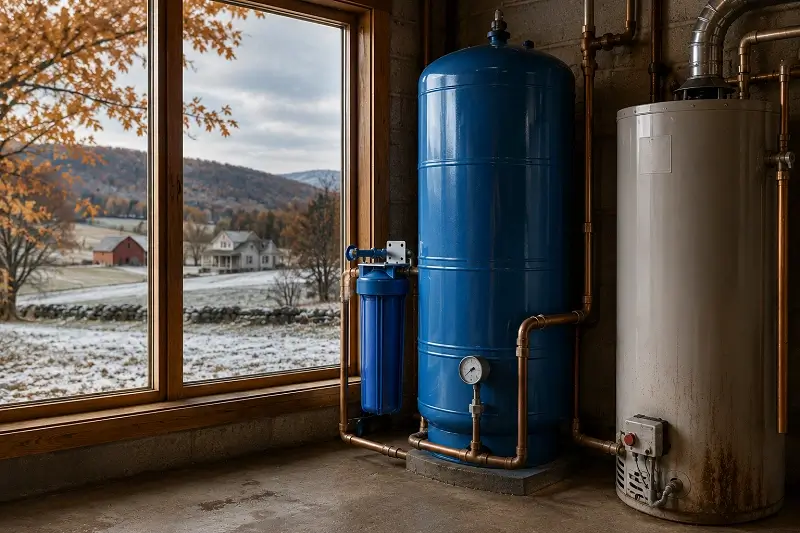
Often, yes. More than a million Pennsylvania households rely on private wells, and Pennsylvania DEP notes the state doesn’t regulate private well construction or water quality the way municipal systems are regulated — but that’s a water-quality point, not a temperature one. What matters here is depth and source: shallow wells and groundwater in rural parts of the county can run colder through fall and winter than a municipal line that’s buffered by treatment and storage infrastructure.
This is most noticeable in rural Berks towns like Oley, Fleetwood, Maxatawny, Hamburg, and Bernville, where private wells are the norm rather than the exception. Homes on municipal water in Reading, Wyomissing, and Sinking Spring generally see a smaller seasonal swing, though the same underlying principle still applies.
How Do You Know Your Water Heater Is Struggling to Keep Up This Fall?
A unit working through its normal seasonal load and a unit that’s failing can look similar at first. Watch for:
- Longer wait for hot water than you’re used to at the same time of day
- Temperature swings mid-shower instead of a steady, consistent temperature
- The unit is running almost constantly rather than cycling on and off normally.
- A noticeable jump in your gas or electric bill without any other change in usage
These are early strain signs, not necessarily a breakdown. If you’re seeing leaks, discolored water, or the unit failing to heat at all, that points to a different problem — our hot water heater troubleshooting guide walks through the full list of warning signs and what each one usually means.
Can You Prevent Your Water Heater From Working So Hard This Fall?
Some of the seasonal strain is unavoidable — you can’t change the temperature of the water coming into your home. But a few things keep the unit from working harder than it needs to:
- Flush the tank before the coldest months to clear sediment that’s been settling all year.
- Check the thermostat setting rather than assuming a higher setting always means faster hot water.
- Insulate exposed pipes and the tank itself if the unit sits in an unconditioned space.
Our plumbing winterization guide covers the full seasonal checklist, and our water heater maintenance service page has more on what a professional flush and inspection covers.
Get Your Water Heater Ready for the Rest of Fall
If your water heater feels like it’s working overtime, or you just want it checked before the coldest weeks hit, our team can take a look and tell you honestly whether it needs service or just a seasonal tune-up.
Whether you need a maintenance flush, a repair, or an honest answer about whether your unit can handle another Berks County winter, our licensed team is available 24/7 across Reading, PA and all of Berks County.
Call (484) 332-3573 — available 24 hours a day, 7 days a week
Or contact us online to schedule your water heater service.
Frequently Asked Questions
Does cold weather affect hot water heater performance?
Yes. Colder incoming water widens the gap your water heater has to close to reach your set temperature, so it runs longer and more often. This is normal seasonal behavior, not a sign of a problem on its own.
Can cold weather affect a tankless hot water heater?
Yes. Cold incoming water lowers the flow rate a tankless unit can maintain at your target temperature, and undersized units can throw error codes in extreme cold. See our tank vs. tankless guide for how the two types compare.
Why does hot water run out faster in winter?
Colder incoming water takes longer to heat, which slows tank recovery time between uses. At the same time, most households use more hot water in winter, so a tank that recovers slower is also being asked to do more.
What are the first signs of a water heater going bad?
Common early signs include inconsistent temperatures, unusual noises, and discolored water. For the complete list and what each sign typically means, see our hot water heater troubleshooting guide.
Should I flush my water heater before winter?
Flushing before the coldest months clears sediment that builds up over the year and helps the unit heat more efficiently when it’s already working harder. It’s a simple step that pays off through the season.
Does well water get colder than municipal water in Berks County?
Often, yes — especially with shallow wells in rural areas. Municipal systems in towns like Reading and Wyomissing typically see a smaller seasonal swing than private wells in areas like Oley or Hamburg.