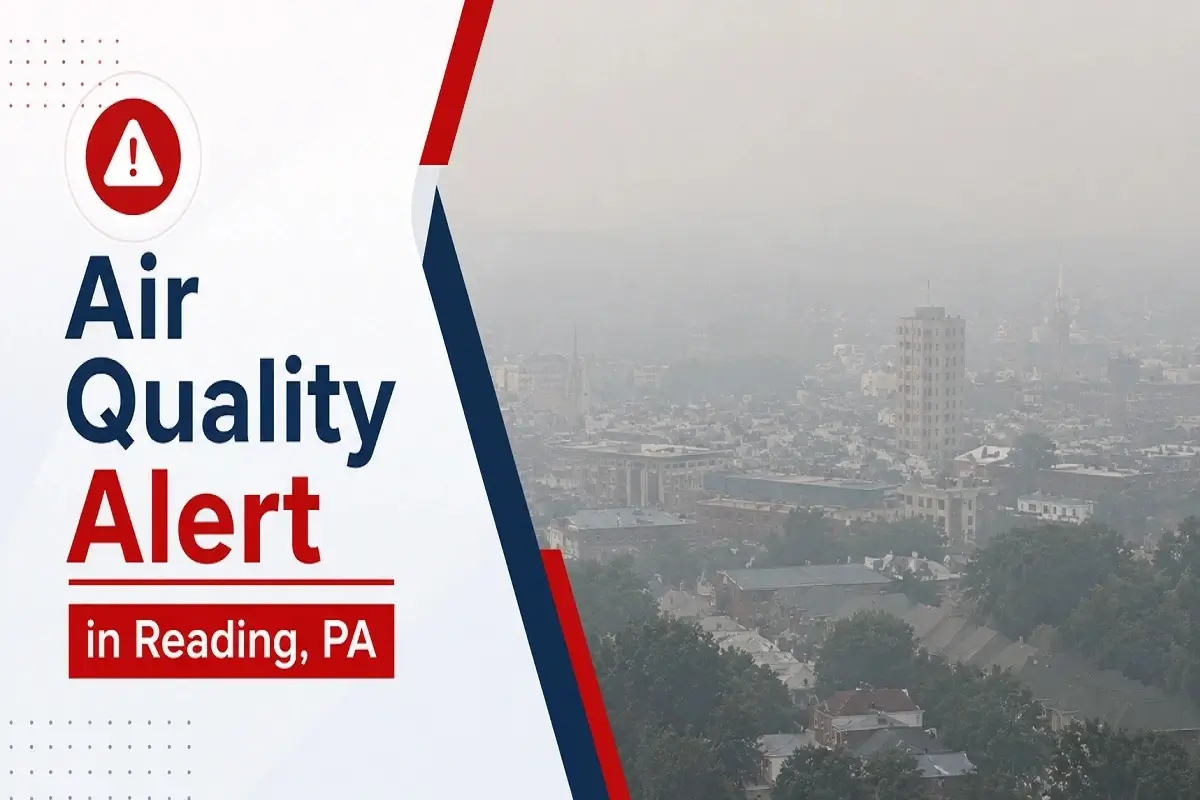

Berks County has been under multiple Code Orange and Code Red air quality alerts this summer, driven by Canadian wildfire smoke and ozone buildup, and local particulate readings have spiked as much as 9x in a single week.
An air quality alert doesn’t stop at your front door — it gets pulled into your home through windows, doors, and leaky ductwork.
Setting your HVAC to recirculate, upgrading your filter, and sealing leaky ducts are the three things that actually keep it out.
If you’ve gotten a phone alert this summer warning you to limit outdoor activity, you’re not the only one in Reading who’s asked what that actually means for the air inside your house. It’s a fair question and the answer isn’t reassuring by default. Air quality experts monitoring Berks County recently measured a jump in particulate matter from 19.2 one week to 179.4 the next, a spike WFMZ 69 News attributed directly to wildfire smoke drifting in from Canada. That’s not a rounding error. That’s nine times worse air in seven days, in Reading’s own backyard.
What Triggered This Air Quality Alert in Berks County?
Two separate sources, both real and both currently active. Pennsylvania’s Department of Environmental Protection issued a Code Orange air quality alert for ozone specifically naming Berks County on June 30, 2026, driven by sunny skies and high heat. Separately, DEP issued Code Orange and Code Red alerts for particulate matter tied to Canadian wildfire smoke across South Central and Eastern Pennsylvania through July 2026 — the same stretch when the local particulate reading WFMZ 69 News reported jumped from 19.2 to 179.4.
Ozone and wildfire smoke aren’t the same air pollution environmental problem, even though they trigger the same color-coded alert system. Ozone forms locally, from heat and sunlight reacting with everyday emissions. Wildfire smoke is a fine-particulate problem that travels hundreds of miles and settles into whatever it touches — including your home’s ductwork.
How Does an Air Quality Alert Get Inside a Closed-Up House?
It gets in even when every window is shut. Four main paths let outdoor air pollution concerns become indoor air quality concerns:
Step 1 — Doors and windows.
Older Reading-area homes have more gaps around original frames than newer construction, and it doesn’t take much of a gap.
Step 2 — Your HVAC’s outdoor air intake.
Most residential systems pull in some fresh outdoor air as part of normal operation. During an active alert, that intake is pulling in exactly what you’re trying to avoid.
Step 3 — Leaky or unsealed ductwork.
If your ducts run through an attic, crawlspace, or unconditioned space and aren’t properly sealed, they pull in unfiltered outside air before it ever reaches your filter.
Step 4 — Everyday air exchange.
Every door opening, and every bathroom or kitchen exhaust fan running, pulls in some volume of outside air to replace it.
What Should You Do During an Air Quality Alert?
- Switch your HVAC to recirculate, not fresh-air intake, if your system supports it — this stops pulling in outside air entirely while the alert is active.
- Upgrade to a MERV 13 filter or higher where your system allows it — standard fiberglass filters do almost nothing against smoke-sized particles.
- Skip the open windows, even after the temperature drops in the evening — smoke and haze often linger.
- Hold off on a wood stove or fireplace during an active alert — PA DEP specifically flags this as making indoor conditions worse, not better.
- Run a HEPA air purifier in bedrooms or wherever you spend the most time, especially if anyone in the house has asthma or COPD.
Is Wildfire Smoke or Ozone the Bigger Air Pollution Health Concern for Berks County?
| Pollutant | Where it comes from | When it’s worse | Who’s most at risk |
| Wildfire smoke (PM2.5) | Drifts in from wildfires hundreds of miles away | Anytime wind patterns carry smoke into PA | Asthma/COPD, children, older adults |
| Ground-level ozone | Forms locally from heat, sunlight, emissions | Hot, sunny summer afternoons | Same groups, plus outdoor exercisers |
Both are real air pollution health concerns, and per the CDC, both are associated with worsened asthma and respiratory symptoms — the response inside your home (filtration, sealed ducts, recirculation) is the same either way, even though the outdoor cause is different.
Are Leaky Ducts Turning a Bad Air Quality Alert Into a Bigger Problem?
Probably, if your ductwork hasn’t been inspected recently. According to ENERGY STAR, leaky ducts can cut heating and cooling efficiency by as much as 20%, and a typical home loses 20–30% of the air moving through its duct system to leaks, gaps, and poor connections. That’s not just a comfort and energy-bill problem — it’s the same leak path pulling unfiltered outdoor air, smoke, and ozone-heavy air straight past your filter.
| Method | What it does | Best for | Downside |
| Tape or mastic sealant | Manually seals accessible duct joints | Small, easily reached leaks | Misses hidden leaks; tape degrades over time |
| Aeroseal | Seals ductwork from the inside, including hidden leaks | Whole-system sealing | Requires a certified installer |
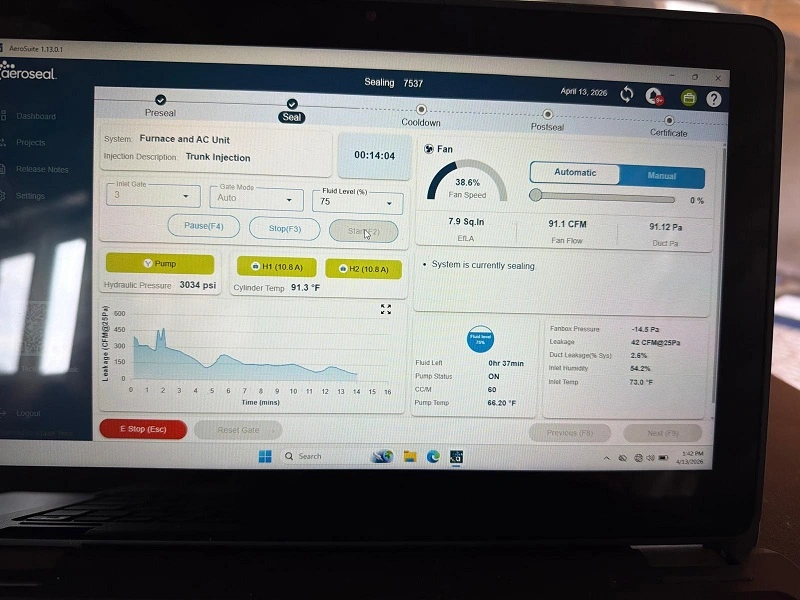
Berks Plumbing & HVAC Specialist is an authorized Aeroseal duct sealing service provider — we don’t rely on tape alone for duct sealing, since tape can’t reach the leaks hidden inside your walls and ceilings. Aeroseal work can improve system performance by 10–40% by closing the air loss ENERGY STAR describes above, which matters for both your energy bill and how much unfiltered outside air is getting into your home during an alert.
How Do I Know If My Home’s Air Quality Needs Attention?
- A smoky or musty smell indoors on alert days, even with windows closed — often means outside air is bypassing your filter through gaps or ducts.
- More dust than usual collecting near vents — frequently a sign of a dirty filter or a leaky return duct pulling in unfiltered air.
- Worsening allergy or respiratory symptoms indoors during smoke or ozone alerts — a sign your filtration isn’t keeping pace with outdoor conditions.
- Uneven airflow room to room — often points to duct leaks that are also letting in unfiltered outside air.
If any of that sounds familiar, it’s worth having your ductwork and filtration checked before the next alert, not during it.
Berks County Homes Are More Exposed Than Most
Reading, West Reading, and Mount Penn have some of the oldest housing stock in the county, meaning more gaps around original windows and doors than newer construction. In Oley, Fleetwood, and Maxatawny, older HVAC ductwork was often never sealed to modern standards — the same leaks that let in humidity also let in smoke and ozone-heavy air. In Wyomissing, Sinking Spring, and Shillington, central systems already working overtime through a hot Pennsylvania summer are absorbing the extra load of back-to-back air quality alerts with no relief.
A Local HVAC Expert Weighed In
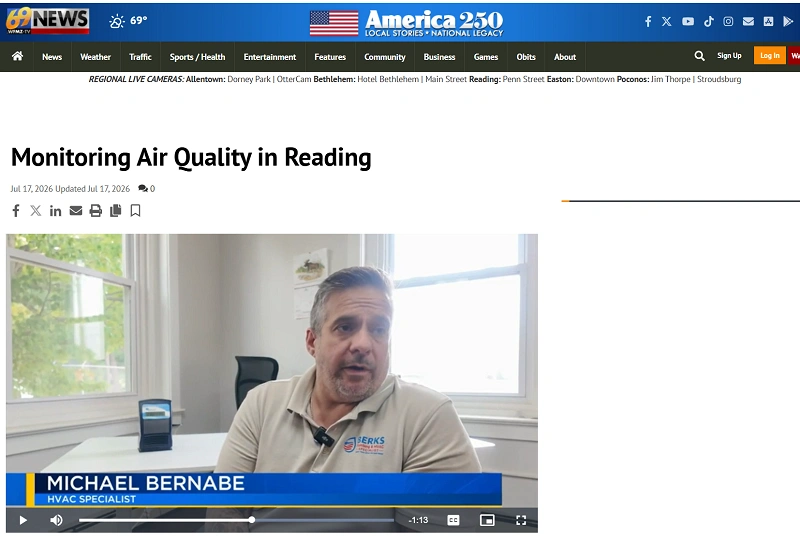
Watch the WFMZ segment: Monitoring Air Quality in Reading
Michael Bernabe, an HVAC and Air Quality Specialist with Berks Plumbing & HVAC Specialist, was featured on WFMZ 69 News in July 2026 discussing the Berks County particulate spike. He described the diagnostic process his team uses to test a home’s air and report back the exact particulate readings a customer is dealing with — the same testing approach behind the 19.2-to-179.4 jump reported in that segment. It’s a real, local example of what “checking your indoor air quality” actually looks like in practice, not just a service line on a website.
FAQs
1. Does a standard HVAC filter stop wildfire smoke?
Not effectively. Standard fiberglass filters catch larger particles like dust and pet dander. Wildfire smoke particles are much smaller — a MERV 13 filter or higher, or a dedicated HEPA purifier, is what actually catches them.
2. Should I turn my HVAC off completely during a Code Red air quality alert?
No — switch it to recirculate instead. Running it on recirculate with a good filter actively cleans the air already inside your home; turning the system off doesn’t.
3. How is an ozone alert different from a wildfire smoke alert?
Ozone forms locally from heat and sunlight; wildfire smoke drifts in from fires that can be hundreds of miles away. Both trigger the same DEP color-coded alert, and both call for the same response indoors.
4. Can leaky ducts really make an air quality alert worse inside my house?
Yes. A leaky return duct running through an attic or crawlspace can pull in unfiltered outside air — smoke, ozone, and all — before it ever reaches your filter.
5. Is Berks Plumbing & HVAC Specialist an authorized Aeroseal dealer?
Yes. We don’t rely on tape-only duct sealing — Aeroseal reaches leaks hidden inside walls and ceilings that manual sealing methods can’t.
6. How often does Berks County get air quality alerts like this?
Multiple times in 2026 alone — DEP issued ozone alerts naming Berks County in the spring and summer, plus wildfire-smoke-driven alerts across the region in July. It’s become a recurring, not one-off, air quality concern for the area.
7. Worried about what’s getting into your home’s air right now?
Berks Plumbing & HVAC Specialist provides indoor air quality testing, filtration, and Aeroseal duct sealing across Reading and all of Berks County. Call (484) 332-3573 to schedule an air quality assessment.